Healthy Living
Dullness and Dark Spots After 50: What Actually Helps
Skin changes after menopause, with collagen loss, slower cell turnover, and sun-related pigmentation contributing to dullness and brown spots. Dr. Jen Ashton explores two prescription treatments from Alloy Health, explaining the evidence behind azelaic acid, niacinamide, tretinoin, and copper peptides—and what women should know about their benefits and limitations.
Here’s a fact most people don’t know: In the first five years after menopause, skin can lose roughly 30% of its collagen. At the same time, skin cell turnover slows down, so dead cells linger on the surface and reflect light less evenly. That’s the dullness. Add decades of sun, and the melanocytes that make pigment start producing it in clusters. Those are the brown spots many of us call “age spots,” and that I call proof we’ve been outside.
Neither one is dangerous. But if they bother you, there are now prescription options with real science behind them, and Alloy Health has two that are worth understanding.
The Hyperpigmentation Treatment Rx has the strongest evidence for improving pigmentation
This cream combines three ingredients that attack pigment from different directions, which is exactly how dermatologists think about it.
Azelaic acid at 20% slows tyrosinase, the enzyme that makes melanin. In a study published in the International Journal of Dermatology, 20% azelaic acid performed comparably to 4% hydroquinone, long considered the gold standard, with fewer side effects.
Niacinamide at 4% blocks pigment from being handed off from melanocytes to the surface skin cells, a mechanism described in the British Journal of Dermatology. A trial published in Dermatology Research and Practice found 4% niacinamide improved melasma, also comparably to hydroquinone. It’s gentle and supports the skin barrier, which matters more after 50.
Low-dose tretinoin speeds up turnover so pigmented cells shed faster. This is one of the most studied ingredients in dermatology, and a landmark trial in the New England Journal of Medicine showed tretinoin lightened the sun-related spots most common in our age group. The low dose is the point here. Mature skin is drier and less forgiving, and the best retinoid is the one you can actually use consistently.
The Copper Peptide Cream Rx (GHK-Cu) is promising, but the research is still early
GHK-Cu is a copper-binding peptide that occurs naturally in the body, and levels decline with age. In lab studies, it signals skin to make collagen and repair itself, and small human studies have shown improvements in firmness and fine lines. Alloy’s formula pairs 2% GHK-Cu with hyaluronic acid for hydration. I’m genuinely interested in copper peptides, but I’ll be honest with you: The research is far smaller than what we have for tretinoin, and this is a compounded prescription, not an FDA-approved drug.
Also, remember, using a peptide topically is much different from taking an injectable or IV peptide (which I would NOT recommend at this time given the vast lack of human safety and efficacy data). For a topical peptide like this one, think of it as a supporting player for firmness and texture, not a pigment treatment.
What I would do
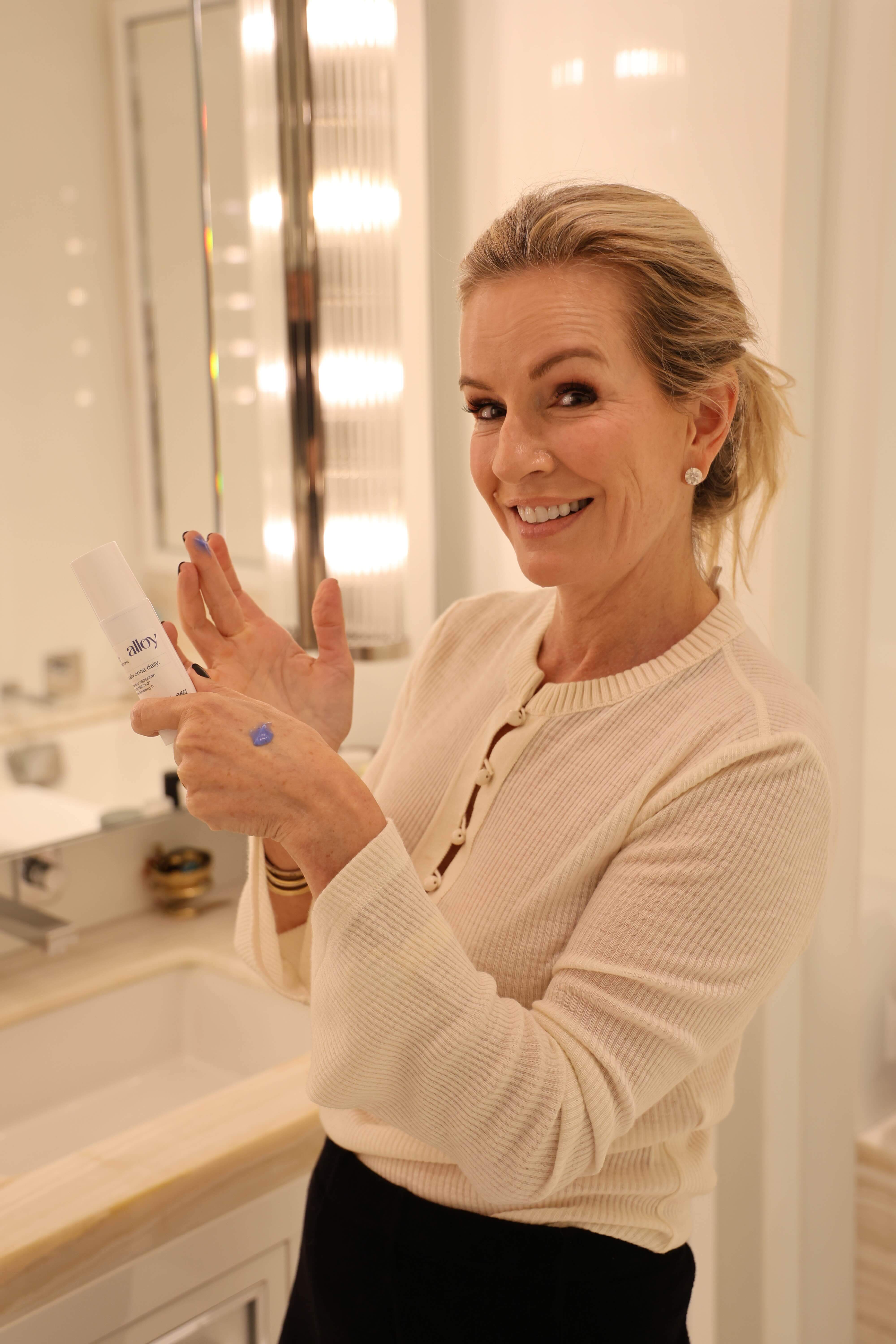
If dark spots are your main concern, start with the Hyperpigmentation Treatment Rx. I’ve been enjoying the Copper Peptide Cream Rx because it’s a new tool in my toolkit for skin. It adds a dimension and an ingredient that I’ve been missing.
One more thing: Please don’t skip daily sunscreen. Every one of these ingredients can be undone by a single unprotected afternoon, and I say that as someone who has learned it the hard way. And when in doubt, consult a dermatologist about any spot that’s new, changing, or irregular.
$20 off for new customers with code: AJENDA20