Wellness Tips
The Most Underused Tool in Menopause Medicine
Sex can change after 50, but it doesn't have to stay that way. Dr. Jen explains how a vibrator can support arousal, blood flow and tissue health, shares one product she likes, and gives you the words to bring it up with your doctor.
Let’s say the quiet part out loud: Sex can change after 50, and rarely in ways we asked for. Estrogen falls, vaginal tissue thins, arousal takes longer, and sensation can feel muted. Many of you tell me you assumed this was simply the deal now. It doesn’t have to be. One of the simplest, lowest-risk tools I can point you toward requires no prescription at all.
And if the idea makes you squirm a little, that makes sense. Many of us came of age long before vibrators were something you could mention out loud. It took Charlotte and the Rabbit on Sex and the City in 1998 to pull them out of the nightstand and into the mainstream. If you grew up before that, you may still carry some of the old embarrassment. You can set it down. It’s time!
Vibration works on the anatomy, not just the mood
The clitoris is dense with nerve endings—roughly 10,000 nerve fibers according to researchers at Oregon Health & Science University. When sensitivity declines with age, a vibrator delivers steady, intense stimulation that can help bridge that gap. Think of this almost like physical therapy for your vagina. Vibration can help increase blood flow into genital tissue, which may support arousal, natural lubrication, and tissue health. A review by Mayo Clinic and Indiana University researchers in the journal Sexual and Relationship Therapy found that vibratory stimulation has evidence-based support for treating difficulty reaching orgasm, is linked with greater desire and overall sexual function, and has shown benefit for arousal problems, though the authors note definitive evidence is still lacking. For something this safe, that’s pretty compelling.
If you need clitoral stimulation, you’re in good company
In a nationally representative study in the Journal of Sex & Marital Therapy, 36.6% of women needed clitoral stimulation to orgasm during intercourse. Only 18.4% said penetration alone was enough, and another 36% said clitoral stimulation made their orgasms better. If intercourse alone has never done it for you, nothing is wrong with you. And sometimes a vibrator does what a human simply cannot: consistent rhythm and intensity for as long as you need, without a hand cramp. No offense to anyone’s partner.
New is good for your brain, and possibly your relationship
Novelty engages the brain’s reward pathways. Used solo, a vibrator helps you learn what your body responds to now, which may differ from what worked at 35. Used with a partner, it’s an addition, not a replacement, and it can open a conversation many couples need to have anyway.
One option worth a look
First, the important part: I have no financial relationship with Babeland or with this product I’m about to tell you about. I recommend the site because of how it describes everything it sells, plainly and without shame or stigma. It also won’t drag you into some gross or explicit algorithm.
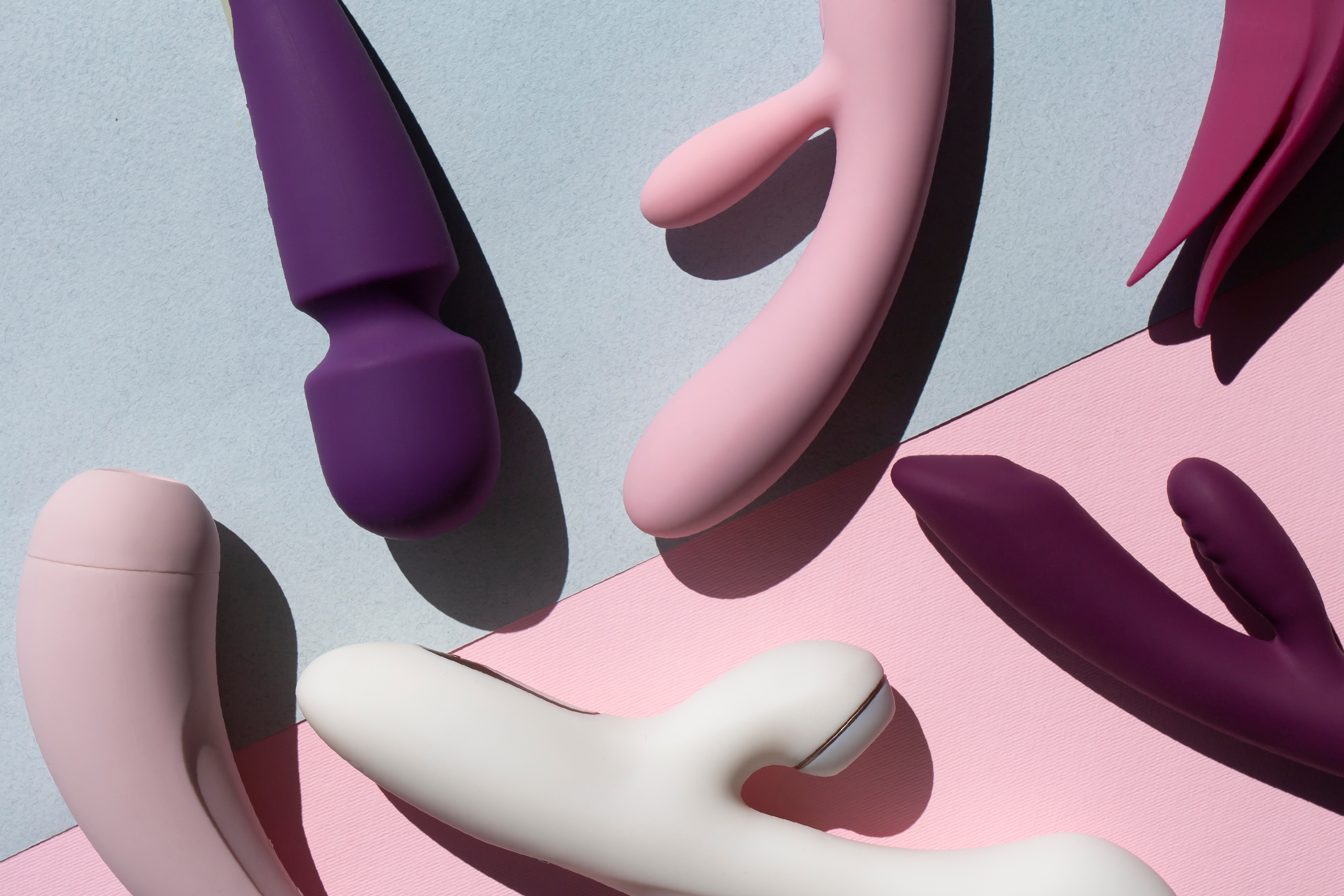
The Heat Up and Chill G-spot Vibrator offers dual stimulation: a curved internal head wrapped in a heating and cooling panel, plus “bunny ears” on a second arm for clitoral stimulation, each with a motor that runs on 10 speeds. It’s made of silicone free of phthalates and latex, fully waterproof, and rechargeable by USB. Charlotte would approve. I’d link to it here, but email filters still get squeamish about these things. You’ll find it on Babeland’s website.
One more thing to note: It heats to 105°F and cools to 28°F, so if you have dryness or thinning tissue, start with heat and go easy on cold. Pair any silicone toy with a water-based lubricant or natural coconut oil (just check your specific toy’s instructions to ensure it’s safe), and if penetration is painful, begin with external use.
What to say to your doctor
If sex has become uncomfortable or less satisfying, tell your doctor: “Since menopause, sex has become painful and harder to enjoy. Could this be genitourinary syndrome of menopause, and would vaginal estrogen, a vibrator, or both help me?”
This isn’t indulgence. It’s maintenance, and you deserve it. You’re welcome!