Mental Health
What If Emotional Wellness Isn't All About Feeling Good?
Grief isn’t something we need to “get through,” eliminate, or rush past. In this powerful conversation with grief specialist AmarAtma Singh Khalsa, we explore emotional wholeness, the complexity of grief, and why making space for difficult emotions may be part of what it means to be emotionally well.
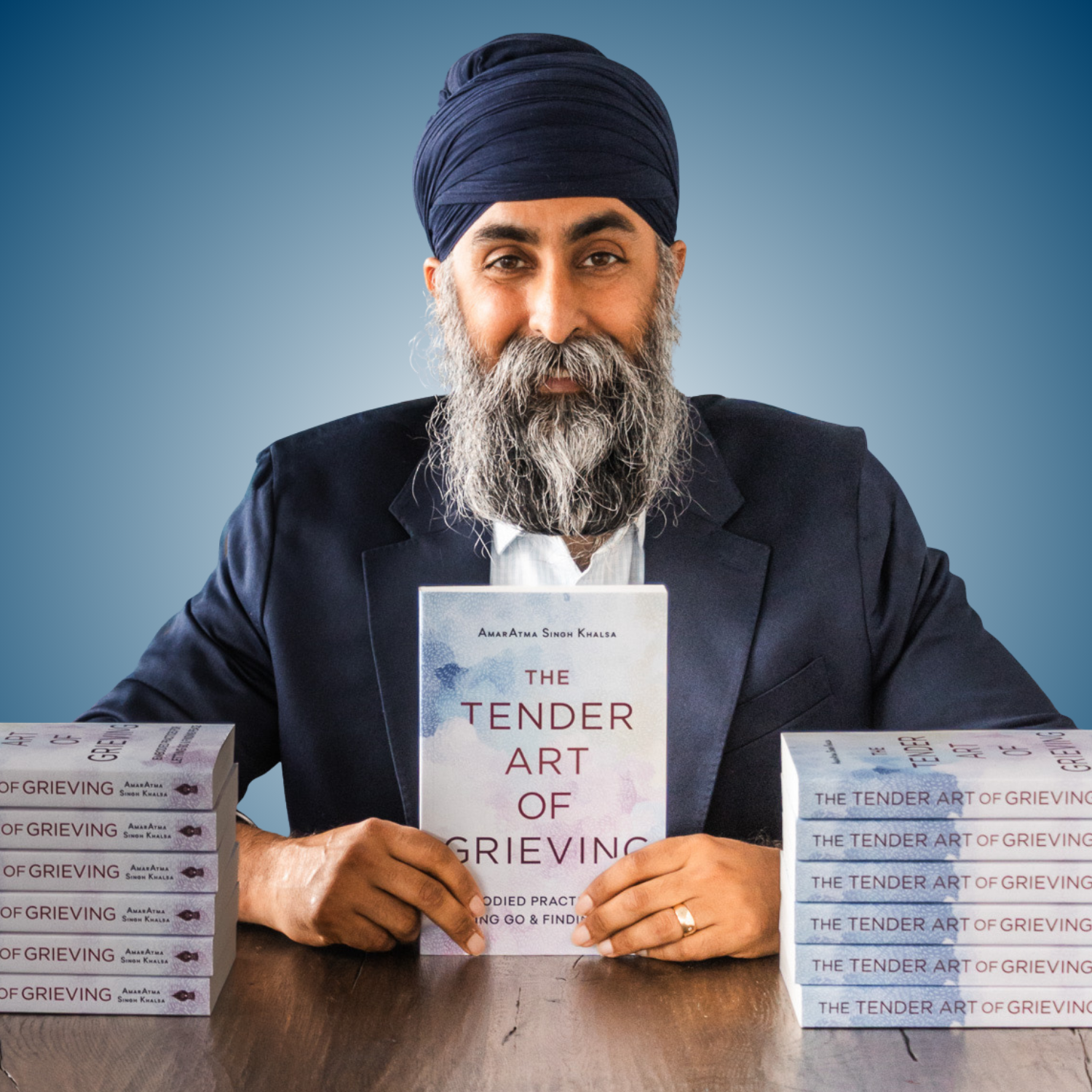
A note from Dr. Jen: I know a thing or two about grief, after my ex-husband and my children’s father, Rob, died by suicide in 2017. Also, with two aging parents, I am experiencing anticipatory grief, as are so many of us. It’s for that reason that I have been thinking about grief a lot: why we fear it, why we don’t prepare for it, why we try so hard to “get through it” when it comes. It’s why, when I learned about AmarAtma and the fact that he has dedicated his entire life and career to the study and management of grief, I knew I had to meet him. Once I did, I knew that you had to meet him too. I think you’ll agree that his words are impactful and important.
–
Somewhere along the way, wellness became closely associated with feeling good. Be positive. Find the silver lining. Don’t dwell on it. Get over it. Let it go. Turn pain into purpose.
But what if emotional wellness includes our capacity to remain compassionately present with the fullness of our emotional lives?
I began asking some version of this question over twenty years ago. In 2004, I was in a yoga class practicing an intense physical set. As the teacher pushed us to keep going, I could feel anger rising. My body tightened. Heat moved into my face. I wanted to scream. Instead, I pushed through. I swallowed the feeling, finished class, and thought I had handled it.
Later that evening, I found myself picking a fight with my girlfriend over practically nothing. Thankfully, she didn’t join me. She simply asked, “Where is all this anger coming from?” I had no idea.
The emotion I thought I had dealt with hadn’t actually been dealt with at all. I had simply stopped expressing it.
Have we confused emotional regulation with emotional elimination?
There are certainly moments when we need to contain or temporarily compartmentalize emotions. During my years working as a hospital chaplain, I’ve watched physicians walk into the next patient’s room after a devastating death. I’ve watched parents hold themselves together long enough to care for their children. Sometimes we just need to get through the next five minutes.
Temporary containment can help us through those moments. However, when avoidance becomes our primary strategy, we lose opportunities to understand and tend to what we are feeling.
I see this constantly in grief. We tell people to stay strong, keep busy, find meaning, move on, or let go. Someone dies and we say, At least they’re in a better place. Someone loses a pregnancy and hears, You can try again. Someone’s life falls apart and we reassure them, Everything happens for a reason.
These responses are usually well intentioned. We want to relieve suffering. But sometimes our urgency to make another person feel better says as much about our discomfort with their pain as it does about what they actually need.
From emotional wellness to emotional wholeness
In our culture, there is an almost instinctive tendency to divide emotions into categories: positive and negative, good and bad, light and dark.
Once these divisions emerge, we can begin creating divisions within ourselves. There are parts of our emotional lives we welcome and parts we exile. We invalidate and minimize the depth of our own emotional honesty and authentic expression.
Emotional wholeness gives us another way to relate to what we feel.
This doesn’t mean acting on every emotion. Anger doesn’t give us permission to hurt someone, nor does fear always mean we are unsafe. Our emotions deserve neither unquestioned obedience nor an automatic rejection. Emotions can be messengers. They spring up from within us carrying knowledge about our inner world. Anger may reveal a boundary that has been crossed. Sadness may uncover longing or a need for care. Fear may show us what we are trying to protect.
In my book, The Tender Art of Grieving, I share that grief is a story of love.
Love is complex. Beyond sentimentality, love carries attachment, belonging, vulnerability, trust, intimacy, connection, memory, and hope. Its layers can also carry resentment, bitterness, betrayal, abandonment, and deep pain.
If love is so messy, why would we expect grief to be any less complex? If it takes our whole heart to love, perhaps it takes our whole heart to grieve.
Grieving is a human response to losing something significant. It can be messy, contradictory, painful, and profoundly tender. Your grief is not a failure of emotional regulation, nor does its presence mean you are emotionally unwell. Grief belongs within the complexity of being human.
I’ve never loved the idea that grief is “love with nowhere to go”
I believe grief is love looking for a place to go. Grief moves through tears. Through memory and ritual. Through stories, connection, and community. It moves into the ways we continue loving someone who is no longer physically here.
This has changed how I understand “letting go.”
Letting go can also mean loosening the resistance that creates divisions within us—the judgment that says we shouldn’t feel a certain way. When we stop fighting the emotional truths that grief exposes, something begins to soften. We create more compassionate space within ourselves for the complexity of what is here.
Perhaps grief isn’t a departure from emotional wellness. Perhaps grieving is one of the ways we practice it.

AmarAtma Singh Khalsa is a grief specialist, Board Certified Chaplain, and founder of the Institute for Compassionate Grieving. A graduate of Harvard Divinity School, his work explores grief literacy, emotional wholeness, and embodied approaches to loss. His new book, The Tender Art of Grieving, is available now. Learn more.