Nutrition Advice
Why I Let My Blood Work Guide My Supplements
Food first is still Dr. Jen’s philosophy, but she explains why she has become more open to strategic supplementation after discovering her own micronutrient gaps. Rather than guessing, she recommends identifying nutrient deficiencies through appropriate testing, choosing quality supplements, and monitoring levels over time.
I used to be much more dismissive about supplements.
My bias was simple: Eat well, get your nutrients from food, and don’t assume that a capsule can make up for a poor diet. I still believe that. Food first is still my default. But over the years, and especially after getting my master’s degree in nutrition, I’ve become much less rigid about it.
One of the assignments in graduate school was to do a detailed assessment of our own micronutrient intake. I remember thinking I would probably do pretty well. I eat a varied diet. I know what I’m supposed to be eating. And even I wasn’t consistently hitting everything. In fact, I was deficient in almost 30% of nutrients recommended by the RDA to prevent illness, let alone to promote health.
That was humbling. But I certainly wasn’t an outlier.
Nutrient deficiencies are extremely common
An estimated 95% of the US population falls short on vitamin D, 84% on vitamin E, 46% on vitamin C, 45% on vitamin A, and 15% on zinc.
Getting the full spectrum of vitamins, minerals, essential fats, and other nutrients from food every single day is harder than it sounds, especially for women over 50. Appetite may be lower, calorie needs can change, and GLP-1 medications (which are used by over 10% of the population) can dramatically reduce how much food you eat. When overall intake goes down, micronutrient intake can go down with it.
This is why I’ve become more open-minded to using supplements strategically. You don’t need a cabinet full of supplements to address every possible nutrient you might be lacking. You need a strategy—not based on guesses about your health, but on real data.
The good news? These inadequacies are usually easy to fix
You just have to know where they exist. Unfortunately, that’s not always obvious. A nutrient deficiency can manifest as fatigue, mood changes, hair or skin issues, and other common symptoms with a number of potential causes.
The most reliable way to determine which nutrients you’re lacking is a blood test. But a standard blood panel doesn’t include most nutrients, typically just calcium. Maybe vitamin D and B12 after menopause, or another nutrient if your provider has a specific reason to order it.
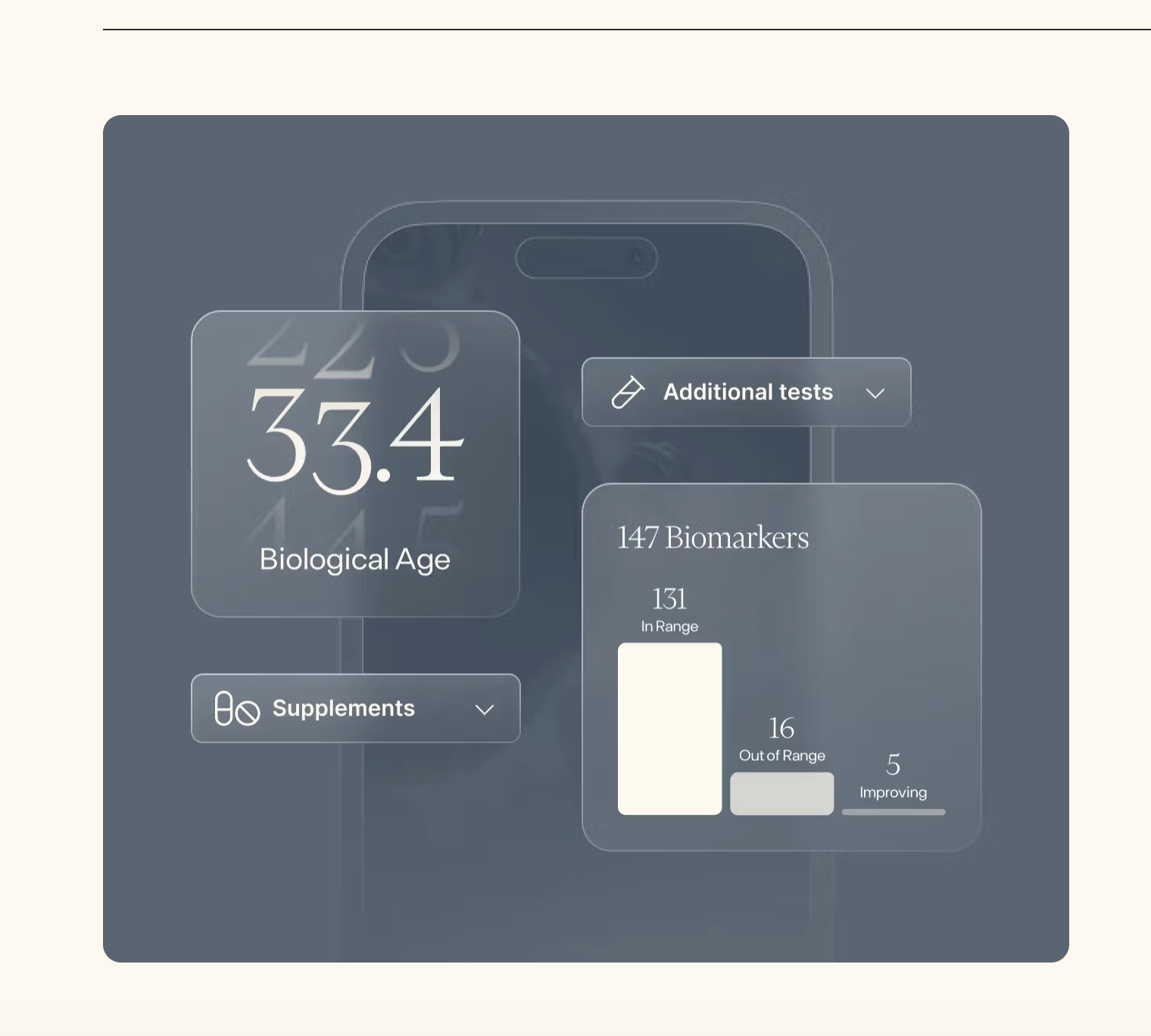
This is one reason why I’ve started extensive routine blood testing with Function Health.
Function performs 19 annual nutrient tests, including those for calcium, vitamin D, methylmalonic acid (an effective B12 proxy), magnesium, iron, ferritin, zinc, the full omega-3/omega-6 fatty acid profile, and more. They also offer an add-on package to check an additional 10 vitamins, minerals, and nutrients (such as vitamins A and E).
I believe these are worth the yearly check-in. The first time I tested with Function, not only did I discover a high mercury level from eating too much fish, but my vitamin D was also not in the optimal range for good health.
These nutrient checks aren’t just about helping you decide if and which supplements you may want or need, they’re also valuable because most of these markers would otherwise go completely unchecked by conventional medical visits.
With routine extensive blood testing, you have access to more information about your health, earlier. That could simply mean peace of mind. It could also mean the ability to address an abnormal result with your doctor before it becomes a bigger problem.
How to choose the right supplements
Knowing which nutrient gaps you need to fill is important. So is choosing the right supplements for the job.
The supplement industry is not the same as the pharmaceutical industry. Purity, potency, and contamination matter. Products can contain less, or occasionally more, than what’s stated on the label, and contamination with heavy metals or other unwanted compounds is a legitimate concern.
I look for companies that use independent third-party testing and provide some transparency around purity and manufacturing. Certifications such as USP or NSF can be reassuring, although not every high-quality product carries them. I’m also wary of enormous proprietary blends where you have no idea how much of anything you’re actually getting.
The bottom line
My philosophy now is not “take everything.” It’s also not “supplements are useless.” It’s food first, identify the gaps through blood testing for the micronutrients that we can accurately measure, supplement thoughtfully, and pay attention to quality.
And more is absolutely not better. Vitamins and minerals can be harmful in excess, and supplements can interact with medications. They can also be expensive, so if we’re going to invest, we want to be as confident as possible in what we’re buying and using. Because if someone who spent years studying nutrition can have trouble covering every micronutrient every day, anyone can.
I recheck my nutrient levels regularly. In doing so, my doctor and I try to optimize benefits and minimize risks of taking supplements. I’m able to see that various vitamin levels are in the safe/normal/healthy range and also make sure that a rare adverse effect isn’t occurring that might show up in kidney or liver function abnormalities.
Monitoring your micronutrient levels is only part of the reason I believe testing through Function is so valuable. Your membership costs roughly $1 a day and includes access to 160+ annual lab tests (5x more than the average physical) detecting 1,000+ conditions, with each result reviewed by a clinician who can flag issues when they appear.
Whether it’s a mercury level, vitamin D number, or something else, the approach is the same: look, find, change, look again, improve. That mindset has changed the way I see supplements and how I take care of my overall health.
Use access and gift code DRJEN to unlock your $50 credit.


.jpg)