Nutrition Facts
Could GLP-1 Injections Every 6 Months Be On The Horizon?
A new class of long-acting GLP-1 drugs is testing whether weight-loss injections can work just as well with fewer doses.
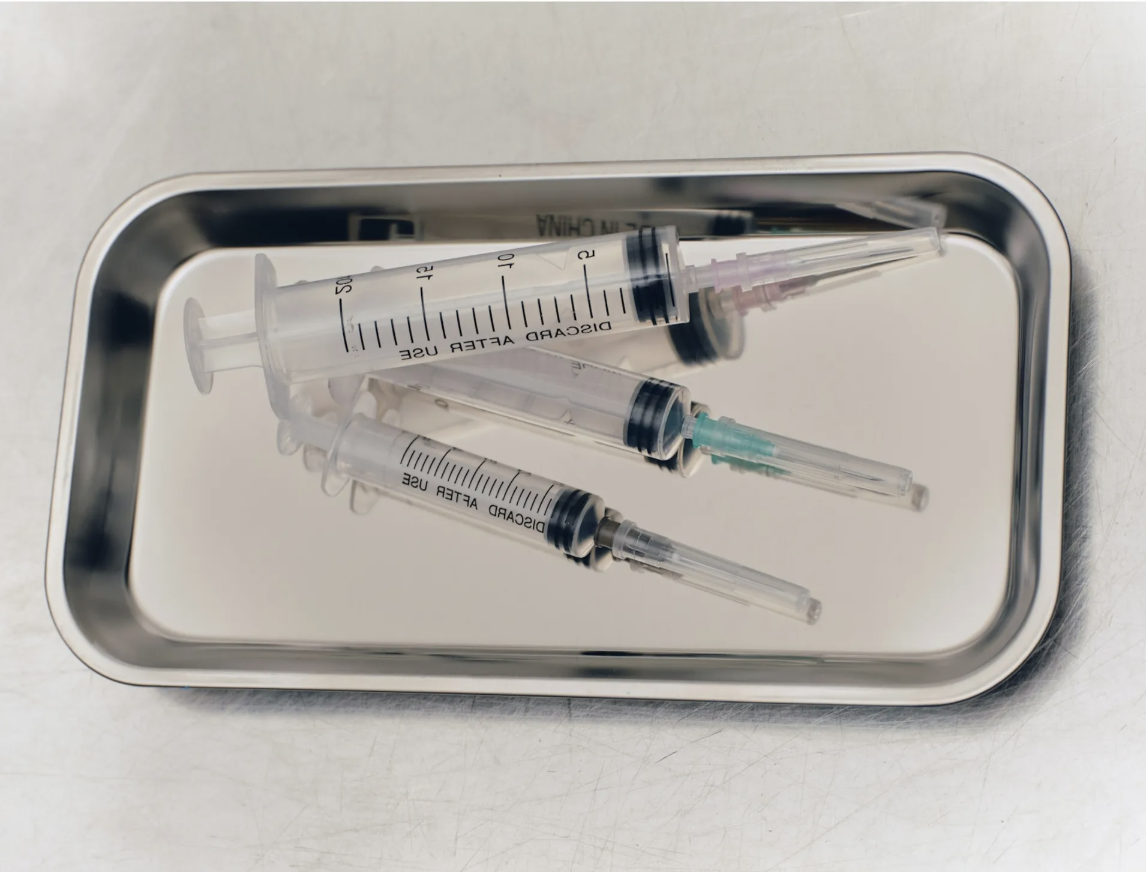
Right now, GLP-1 drugs such as Ozempic and Wegovy require weekly injections. Effective? Yes. Convenient? Not so much. It’s tedious, the cost adds up, and the gastro issues during dose increases can be rough. For a lot of people, it’s enough to stop treatment.
But what if you only needed a couple of injections a year instead?
Meet The New Drug Testing Exactly That
That’s what Amgen is researching. This past June, the biotech giant published phase 2 results for MariTide (maridebart cafraglutide), a long-acting GLP-1 drug designed to be injected once a month rather than once a week.
- Zoom In: Adults with obesity who received MariTide lost up to 20% of their body weight over 52 weeks. Those with type 2 diabetes lost 17% of their body weight and saw improvements in blood sugar.
Plus? Amgen found that starting at lower doses and gradually ramping up reduced gastrointestinal (GI) side effects without sacrificing results. That matters since GI misery is one common reason why people discontinue GLP-1s.
How Does This Even Work, Anyway?
MariTide lasts longer because it’s built differently from current GLP-1 drugs.
- Most GLP-1 drugs are peptides, which our bodies clear quickly (the typical half-life is a few days).
- MariTide is a peptide-antibody conjugate. The GLP-1 peptide is attached to an antibody, which acts like a protective carrier. Antibodies stick around much longer in our system. We're talking half-lives of 2-4 weeks instead of days.
Scientists are testing “depot” technologies to stretch dosing intervals even further. This method injects a reservoir under your skin that releases the drug gradually. Think of it as a time-release capsule.
- Science Says: A Stanford team tested this in rats, and their computer models suggest it could work for 3-4 months in humans.
While this method has yet to be tested on actual people, it shows a credible technical path to quarterly dosing.
Sounds Exciting. But Is It Safe?
Here’s where I pump the brakes. GLP-1 drugs aren’t new (they were FDA approved 20 years ago), so we know weekly injections are safe because we have decades of data.
What is new are these longer-acting formulations with monthly or quarterly injections. We just don’t have the research. So here’s what we’re watching out for:
- GI Side Effects: Just because you inject less often doesn’t mean side effects like nausea or vomiting don’t still occur.
- Overexposure. What goes in slowly goes out slowly. Meaning, if the drug lasts a month (or 3-4 months) and you react badly, it’ll take time for your body to clear it.
- Immune Reactions. MariTide uses antibodies, and your body might produce anti-drug antibodies in response. It hasn't been a major problem in trials, but it’s being monitored.
Where We Go From Here
I predict that we’ll start seeing once-monthly injections within 1-2 years. Quarterly injections could be on the horizon (3-5 years) if human studies back up what the animal models predict.
As for twice-yearly injections? That’s aspirational. The technical challenges are steep. It’s a goal researchers are working towards, but I wouldn’t bank on it anytime soon.
And while I’m all for convenience, what I care about most is whether these newer GLP-1s still improve your quality of life and cardiometabolic health (not just if they’re easier to take).
The science is moving fast. We just need to make sure it’s moving in the right direction.
.png)

