Wellness Resources
The Ammortal Chamber: Hype or Help After 50?
The Ammortal Chamber promises next-level recovery by combining red light therapy, PEMF, vibroacoustic stimulation, breathwork, and molecular hydrogen into one futuristic pod. But for women over 50, the real question isn’t whether it’s impressive — it’s whether the science actually justifies the price.
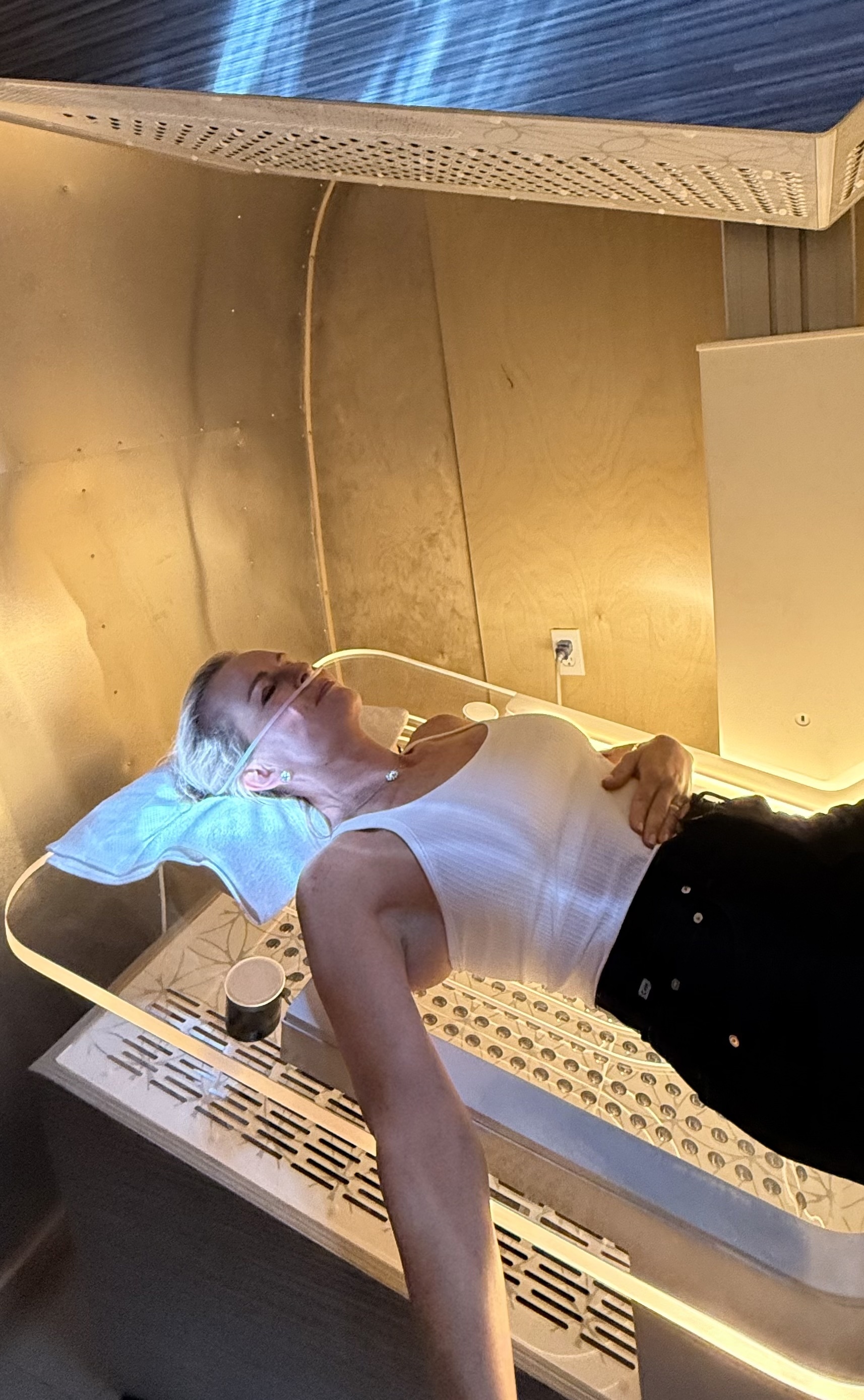
The Ammortal Chamber, first unveiled commercially in 2023, arrived on the wellness scene with a sleek promise: one capsule that stacks multiple recovery and regenerative modalities into a single session. Think of it as a futuristic wellness pod combining vibroacoustic stimulation, photobiomodulation (red/near-infrared light), pulsed electromagnetic therapies, guided breathwork, and even inhaled molecular hydrogen all in a sensory-optimized environment.
Buzzworthy? Yes. Pricey? Very. Retail purchase price for clinics hovers around $160,000. But what’s real, what’s emerging, and what’s speculative? Especially for women over 50, where cost and evidence both matter, its merits are worth unpacking. Is it a waste or actually worth it?
The honest answer is: probably, there is no long-term data on this unique combination, but there is science on each of its modalities. Relaxation and novelty are not the same as proof of long-term health benefit, which is where the conversation needs to stay grounded.
Modality Breakdown: What We Actually Know
1. Vibroacoustic Therapy — Nervous System & Sleep
Pros: Early research links vibroacoustic stimulation to improved relaxation and reductions in stress markers. A 2024 study using sound-rich massage showed measurable stress relief (including increased parasympathetic activity via ECG), and broader sleep literature suggests acoustic interventions can help insomnia symptoms when consistently applied.
Cons: Contraindications include those with pacemakers or implanted electronic devices, active pregnancy (insufficient fetal safety data), and some practitioners caution against use with active inflammation or certain musculoskeletal conditions. Major limitations in published studies persist, with high demand for longitudinal, controlled experiments before clinical conclusions can be drawn.
Takeaway: Useful for stress and sleep when integrated thoughtfully over time…i.e., not just one session.
2. Photobiomodulation (PBM) — Light for Cells
PBM is the strongest science base in the chamber. Red/near-infrared light has been shown in clinical trials to support skin quality and reduce signs of aging. Systematic reviews find analgesic benefits for musculoskeletal pain and modulation of inflammation.
Pros: A 2025 umbrella review of RCTs found PBM significantly reduced pain intensity with moderate certainty of evidence. The safety profile is strong even in oncology contexts — current clinical and preclinical evidence suggests PBM is oncologically safe for skin rejuvenation, with no evidence it should be avoided by patients who have previously been treated for cancer.
Cons: When rigorously tested (e.g., for acute stroke), PBM went from appearing to work, to working only in subsets, to a trial being terminated for futility. Direct application over active tumor sites remains a precautionary contraindication.
Takeaway: The red/NIR component is evidence-anchored and can be a real tool for pain and recovery, but protocol standardization still matters and the evidence base for many claimed benefits is thinner than marketed.
3. PEMF / Electromagnetic Fields — Musculoskeletal Support
Pros: PEMF is considered a noninvasive, safe, and effective therapy, with numerous studies showing potential as a standalone or adjunctive treatment for musculoskeletal disorders, including osteoarthritis, osteoporosis, and fractures. Certain PEMF devices have received FDA clearance for specific indications, including bone healing and pain management. PEMF therapy seems to help reduce chronic low back pain, and the safety profile under medical supervision is generally well-documented.
Cons: No concrete scientific evidence supports dramatic pain reduction claims, and it is strongly recommended that more research and clinical investigations be conducted before recommending it broadly. Contraindications include pacemakers and other implanted electrical devices, pregnancy, active bleeding disorders, and potentially epilepsy.
Takeaway: Complementary, not standalone, and not a replacement for strength training or medical osteoporosis therapy.
4. Inhaled Molecular Hydrogen
Pros: The safety record is consistently clean across trials. A 2023 clinical reviewacross 81 identified clinical trials and 64 scientific publications found positive indications across major disease areas, including cardiovascular diseases, cancer, respiratory diseases, and central nervous system disorders.
Cons: Administration poses real practical challenges — hydrogen's explosive hazard and low solubility require carefully engineered delivery systems, and these challenges haven't been fully resolved for consumer-grade devices.
Takeaway: Interesting, low-risk biology, but still-evolving studies make this worth watching, not worth overstating.
But context matters here:
Athlete endorsement is a marketing signal, not a clinical one. Pro athletes have notoriously high susceptibility to placebos. Their livelihoods depend on recovery, so anything they believe will help tends to do so (at least subjectively). The same pattern played out with cryotherapy, hyperbaric oxygen, and IV drips: all were widely adopted by elite athletes before the evidence base caught up (and, in some cases, never fully did).
The honest framing: Athlete adoption tells you the product has reached a credible, discerning user base willing to invest in marginal gains. That's worth noting. It does not tell you which of the four modalities is doing the work, whether the effect is real or placebo-driven, or whether the results would replicate in a controlled trial.
A Realistic Take for Women Over 50
Your biggest biological priorities after 50 are:
• Sleep quality
• Muscle preservation
• Bone health
• Inflammation control
• Stress physiology balance
What actually moves the needle most for women over 50, in rough order of evidence weight:
Muscle preservation: Resistance training 2 to 4 times per week and adequate protein intake (most research supports 1.2 to 1.6g per kg of body weight daily) are the interventions with the strongest, most consistent evidence. No device substitutes for this.
Bone health: Weight-bearing exercise, calcium and vitamin D adequacy, and where indicated, pharmacological intervention (bisphosphonates or HRT) are the cornerstones. PEMF is adjunctive at best.
Sleep quality: Sleep hygiene, stress management, and evaluation of underlying disruptors (including perimenopause and menopause symptoms) come before any acoustic or vibrational intervention.
Inflammation control: Dietary pattern, movement, sleep, and body composition management have far more robust evidence than any of the four modalities in the chamber.
Stress physiology: Consistent practices (breathwork, exercise, adequate sleep, social connection) outperform single-session or device-dependent interventions in long-term outcomes.
The honest summary: You do not need expensive technology to support your biology. But if you have the foundations in place, some of what is inside the chamber has enough science behind it to be a reasonable addition, not a centerpiece.
Lower-Cost Alternatives That Capture Much of the Value
- Red/NIR light panels and skin / inflammation benefits: Photobiomodulation (red and near-infrared light) has been shown in clinical trials and mechanistic studies to support skin quality, collagen production, wound healing, and reduction of inflammatory markers in tissues.
- Vibroacoustic therapy (low-frequency sound plus vibration) is a recognized sound-based intervention that may influence relaxation and physiological stress responses, with applications in relaxation and nervous system modulation.
- Guided breathwork and meditation for stress: Research on slow, intentional breathing and breathing-based meditation practices shows they can increase parasympathetic activity, improve autonomic balance, and reduce self-reported stress and anxiety.
- PEMF devices for musculoskeletal support: Pulsed electromagnetic field therapy has been studied in clinical trials for osteoarthritis and other musculoskeletal conditions, with evidence of short-term benefits for pain and function, although findings are mixed and ongoing research is needed.
- Sleep and recovery routines: There is strong evidence that behavioral sleep practices, consistent schedules, reduced evening stimulation, and environments that support rest can improve sleep quality and overall health, and music and sound interventions can further enhance sleep onset and depth for many people.
Bottom Line
The Ammortal Chamber is interesting and layered with modalities, some of which do have real clinical backing. In the two times I tried it, I found it relaxing and interesting (I could feel the PEMF tingling in my hands and feet!) But most of the benefits can be strategically approximated with existing, lower-cost tools if your goal is longevity, recovery, pain management, and stress regulation, which are all especially relevant for women over 50.
Science doesn’t reward hype. It rewards consistency, precision, and the right tools for your goals — not the most expensive ones.