Healthy Living
The Antidote to Toxic Perfectionism
Health doesn't require perfect tracking, endless optimization, or a cabinet full of supplements. While science and data are valuable tools, they should support—not replace—the fundamentals that truly drive long-term health: consistent movement, nourishing food, and quality sleep.
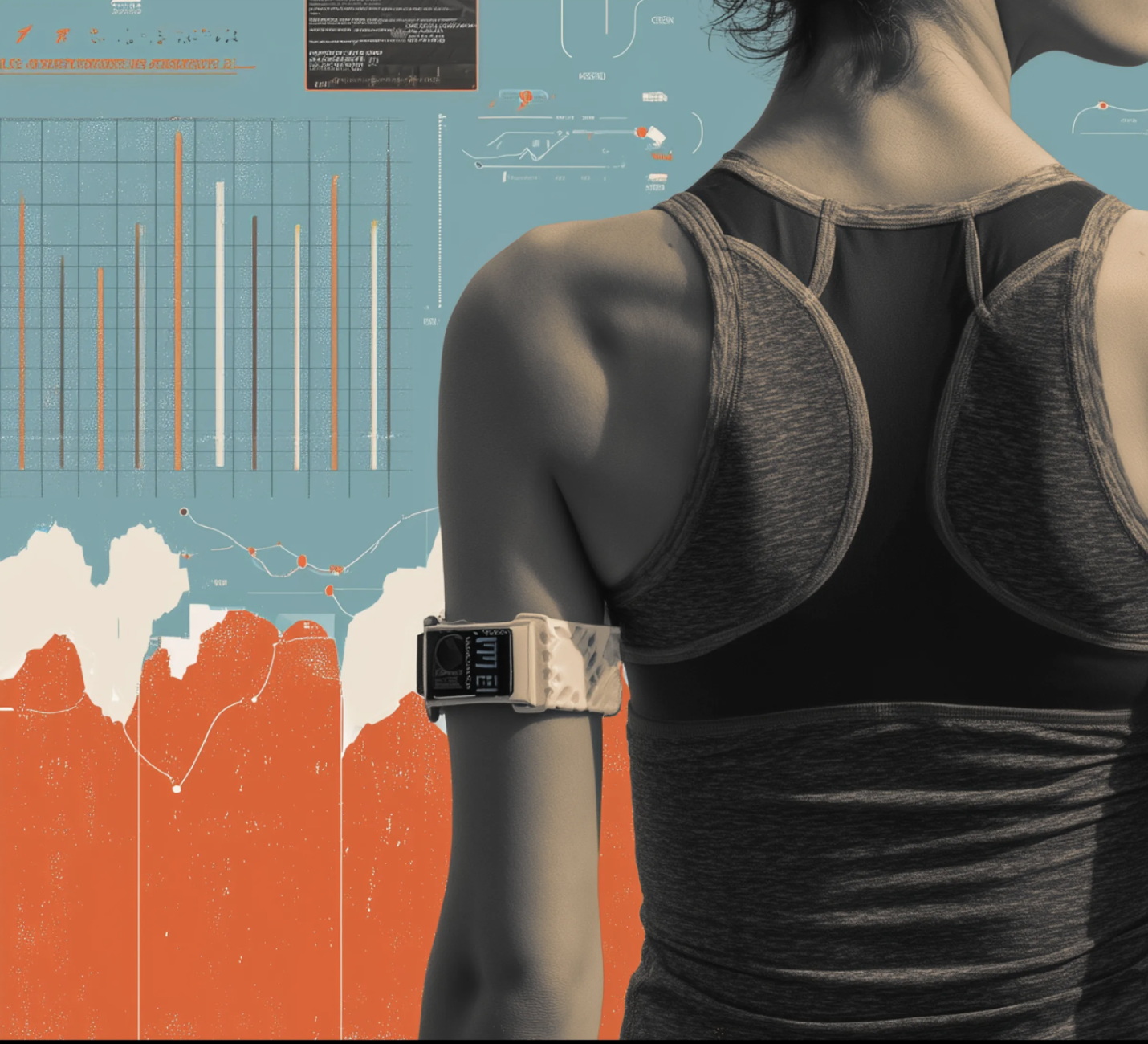
I said something on Instagram recently that struck a nerve in the best way: Health shouldn't be this hard. That we've turned it into a dissertation exercise, with tracking and statistics and trials and data inputs stacked so high that most people can't see the actual goal underneath them anymore.
The response was immediate and, frankly, cathartic to watch. Hundreds of comments, all essentially saying the same thing: thank you for giving me permission to put the spreadsheet down. But a statement that resonates that widely deserves more precision than a caption allows, so let me clearly say what I meant, and just as clearly what I didn't.
Data Is Not the Enemy
I have three degrees and built my entire professional life on the belief that science and evidence matter more than opinion. But data is supposed to be a means and, for a lot of smart, well-intentioned people, it has quietly become the end. The tracking stopped serving the goal and started replacing it. That's the actual definition of toxic perfectionism in a health context, not caring too much, but mistaking the measurement of health for the experience of it.
The overwhelming majority of what actually predicts how long and how well you live traces back to these three inputs done consistently, not perfectly: Move your body, fuel your body, rest your body. That's not a dumbed-down version of health science, it's the foundation underneath nearly all of it. Resistance training and daily movement. Adequate protein, enough fiber, whole foods most of the time. Sleep that's protected rather than sacrificed. Everything else — the continuous glucose monitor, the HRV ring, the twelve-supplement stack, the biomarker panel — is meant to fine-tune those three things. It was never supposed to become a full-time occupation that sits on top of them.
Dedication Still Matters
Here’s the clarification that matters most, because I think it's the part most likely to get lost. This is not permission to coast. It’s not an argument for giving in to cravings, skipping workouts because you don't feel like it, or calling any of that "intuitive." Intuitive eating and movement, done well, still require structure and consistency. What I'm describing isn't the absence of effort. It's the absence of white-knuckling — the exhausting, joyless grip it seems like so many people have on their own health, where every meal is a test they're afraid of failing and every missed workout feels like a moral failure rather than a Tuesday.
How Do You Know if Something Is Working?
You don’t need a dissertation’s worth of data to find the answer. My genuinely useful, low-tech rule of thumb: How do you feel and how do you look? Not in a superficial sense, but an honest, embodied, and even clinical one. Do you have energy in the afternoon? Does your clothing fit the way you want it to? Are you sleeping through the night? Can you carry your own groceries, play with your grandchildren, get up off the floor without narrating the effort? Are your clinical blood tests and screening tests normal or optimized?
These are not vanity metrics. They are, in aggregate, a remarkably reliable proxy for whether your fundamentals are actually in order. If the answer is yes, something is working, and you have my full permission to stop interrogating it. If the answer is no, that's useful information too, and it usually points back to one of the three fundamentals — not to a fourth supplement or pricey device you haven't tried yet.
I’d argue that this is the real wellness flex. Not the longest testing panel or the most optimized morning routine, but arriving at genuine strength and vitality without needing an advanced degree in your own biology to get there. Sustained simplicity over years outperforms sustained intensity over weeks every time.
The Bottom Line
Data still matters enormously to me, and it always will. But its job is to occasionally check your work, not to become the work itself. Move. Fuel. Rest. Notice how you feel and how you look. Adjust what needs adjusting. That's the North Star, and it was always meant to be simple enough to actually live by.