Wellness Tips
What to Actually Do About 3 AM Wake-ups
If you’re waking up drenched in sweat or suddenly wide awake at 3 AM during menopause, you’re not imagining it. Thermoregulatory instability (the loss of your body’s ability to regulate temperature efficiently) is one of the most common yet least understood causes of sleep disruption in postmenopausal women. Understanding the biology behind it is the first step toward finding effective relief.
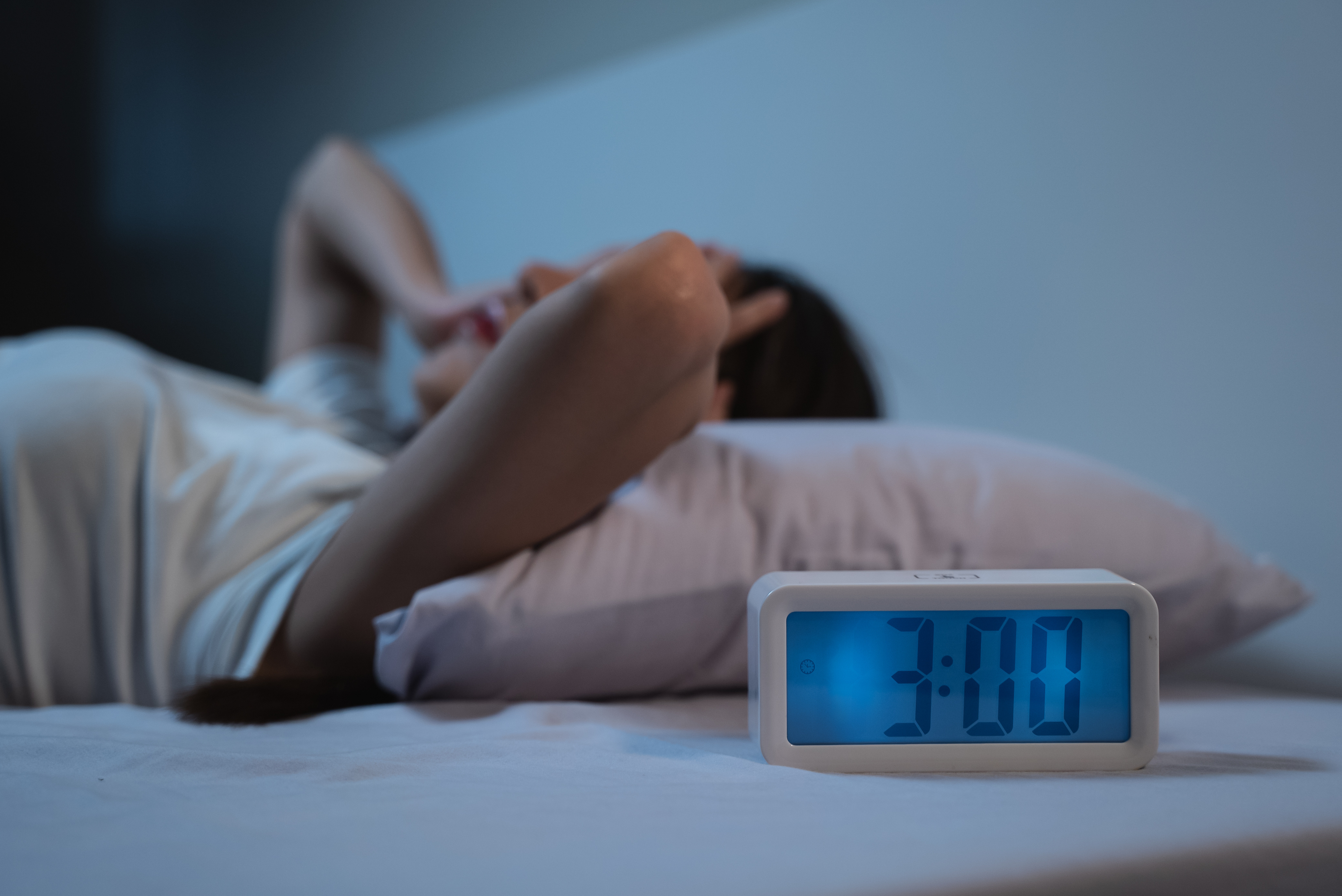
It is 3:14 am You are wide awake (again). Your heart is racing slightly, your skin is hot, and your brain has already moved on to the grocery list and the things you need to do before Tuesday. You’re not anxious. And you generally are not a light sleeper. Your body’s internal thermostat just blew, and you are the collateral damage.
This is thermoregulatory instability, and if you are a postmenopausal woman, you need to understand what it is, why it is happening, and why it is specifically wrecking your sleep, because this doesn’t get discussed enough.
What it is
Your hypothalamus is your brain's built-in thermostat. For most of your adult life, it operated with something called a thermoneutral zone, a comfortable temperature buffer of roughly 0.4 degrees Celsius within which your body made small, quiet adjustments to keep you stable. You could walk into a warm room, eat spicy food, or pull up an extra blanket and your hypothalamus would handle it silently, no alarm, no response. Firing on all cylinders.
In the menopausal years, coincidental with a drop in estrogen levels, that thermoneutral zone essentially disappears. The buffer is gone. Even a half-degree increase in core body temperature can now trigger a hot flash in a menopausal woman, compared to the one-to-two degree change required to trigger a response in a premenopausal woman. Your thermostat did not just get sensitive. It lost its margin of error entirely.
Why it happens
The mechanism is more specific than "low estrogen." Thermoregulatory instability during menopause has been linked to overactivity in a specific cluster of hypothalamic neurons called the KNDy system, which stands for kisspeptin, neurokinin B, and dynorphin. When estrogen levels decline, these neurons become hyperactive, firing signals that inappropriately trigger your body's heat-dissipation response. The result is sudden cutaneous vasodilation, sweating, and a spike in skin temperature, what you experience as a hot flash or a night sweat.
Norepinephrine and serotonin are also implicated, which is why medications that modulate these neurotransmitters can reduce hot flash frequency even without altering estrogen levels. This is not a hormonal problem with a single hormonal fix. It is a neurological dysregulation with multiple entry points for intervention.
Who it affects and when
Sleep disturbances affect an estimated 40 to 69% of women across the menopausal transition, and terminal insomnia, waking in the early morning hours, unable to return to sleep, is one of the most common presentations. Polysomnographic studies have confirmed that objectively measured hot flashes are temporally linked to awakenings and increased nocturnal wakefulness. You are not imagining the timing. The thermoregulatory event wakes you first. The racing thoughts come second.
What to actually do about it
Good news, because there are more treatment options than ever! There are four categories of intervention, and the evidence supports using more than one simultaneously.
Your sleep environment. This is the most underutilized tool, and I believe in this strongly. Set your bedroom between 65 and 67 degrees Fahrenheit. Use moisture-wicking, lightweight layers you can shed without fully waking. A cooling mattress pad is worth serious consideration: a crossover trial in 98 peri- and postmenopausal women found a 56% reduction in nocturnal hot flashes when sleeping on an active temperature-regulation mattress pad, with effects appearing within one week. That is a meaningful intervention with no side effects and no prescription required.
Behavioral approaches. CBT-I, cognitive behavioral therapy for insomnia, targets the arousal cycle that keeps you awake after thermoregulation wakes you up. The two most relevant tools: get out of bed if you cannot return to sleep within 20 minutes (lying awake in bed teaches your nervous system to associate bed with wakefulness), and actively challenge the catastrophic thought, "I'm never going to function tomorrow," because that thought spikes cortisol and guarantees you won't fall back asleep.
Non-hormonal pharmacology. This is where the science has genuinely moved. Fezolinetant and elinzanetant are both FDA-approved neurokinin receptor antagonists that work by interrupting the overactive KNDy signaling directly, reducing hot flash frequency without the use of estrogen. Clinical trials showed fezolinetant (sold under the brand name, Veozah) reduced hot flash frequency by approximately 60% and elinzanetant by approximately 74%. These are not workarounds. They address the root mechanism. They are worth a conversation with your doctor, particularly if you are not a candidate for hormone therapy, but note that blood tests for monitoring liver function are necessary before and during treatment.
Hormone therapy. For women who are appropriate candidates, estrogen remains the most effective intervention for thermoregulatory instability, full stop. The decision involves your personal health history and needs a real clinical conversation, not a Google or ChatGPT search. Do not let old, outdated fear keep you from having it.
You are not a bad sleeper; it’s just that your thermostat lost its buffer. Now you know what broke it, and what can actually fix it.