The Vitamin D Conversation We're Not Having
Vitamin D is best known for supporting bone and immune health, but emerging research suggests its greatest benefit for women over 50 may lie in metabolic health. For women who are deficient, prediabetic, or carrying excess abdominal weight, correcting low vitamin D levels may improve insulin sensitivity and blood sugar regulation.
Every conversation I have about vitamin D starts in the same place: bones and immunity. Sometimes heart health comes up. What’s rarely mentioned, and what I think deserves far more airtime for women over 50, is metabolic health. That’s a real gap. The data on vitamin D and metabolic health, specifically glucose regulation and insulin resistance, is actually the strongest, most consistent evidence we have for this nutrient — even stronger than the cardiovascular case most people assume is the headline.
What the Research Shows
A 2023 meta-analysis of randomized controlled trials in postmenopausal women found that vitamin D supplementation meaningfully reduced fasting glucose, HOMA-IR (a standard insulin resistance marker), fasting insulin, and HbA1c, with the strongest fasting glucose benefit at doses of 1000 IU per day or less, sustained over more than six months.
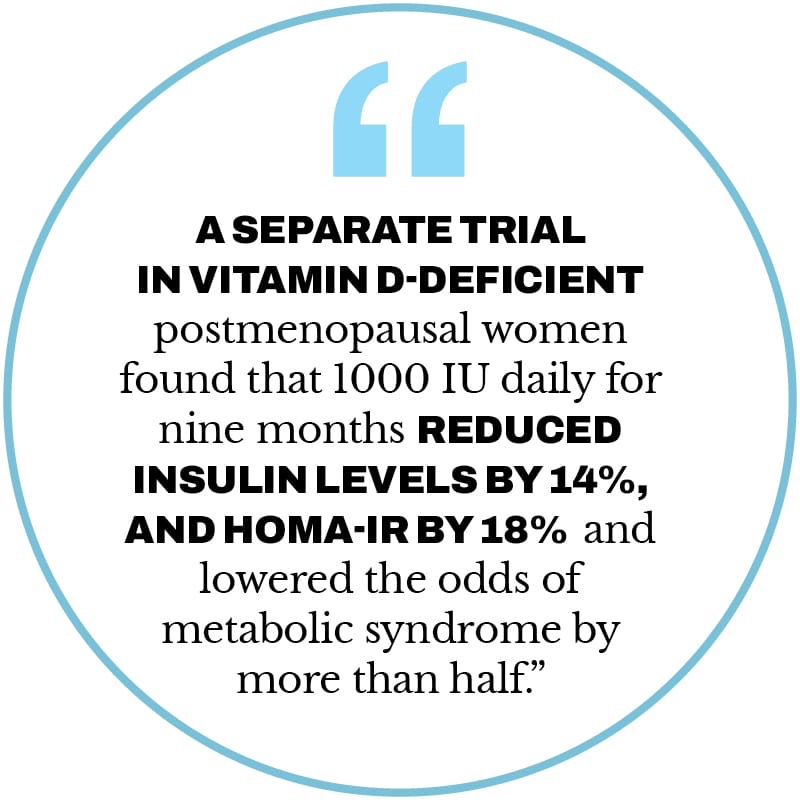
A separate trial in vitamin D-deficient postmenopausal women found that 1000 IU daily for nine months reduced insulin levels by 14%, HOMA-IR by 18%, and lowered the odds of metabolic syndrome by more than half. For women carrying extra weight, this matters even more: A 2026 meta-analysis specifically in patients with obesity-associated metabolic syndrome found vitamin D3, not D2, meaningfully reduced visceral fat, the metabolically active fat around our organs that drives so much of midlife metabolic risk. That D3-versus-D2 distinction is worth remembering the next time you're reading a label.
The Honest Caveat
The 2024 Endocrine Society guideline formally recommends vitamin D for adults with prediabetes, and that recommendation is real and significant. The musculoskeletal and cardiovascular claims you hear most often are the ones with the weakest support, unless you're actually deficient (which is estimated to be 18-25% of women over the age of 50 if using the threshold of less than 20 ng/mL). Deficiency rises substantially in women with obesity, in Black and Hispanic women, and in women during the winter months, so basically, a large number of women are thought to be frankly deficient.
Large trials have not shown that vitamin D prevents cardiovascular events or meaningfully changes body weight in a general population. The metabolic benefit is concentrated in a specific group: women who are vitamin D-deficient, prediabetic, or carrying extra weight, particularly around the midsection. If that's not you, the evidence for high-dose supplementation is far less compelling.
Don’t Skip This Step
Get your serum 25(OH)D level tested before you decide on a dose. This simple blood test is the only way to know whether you’re deficient, insufficient, or already sufficient. I recommend asking about the cost of the blood test beforehand, as at some labs (such as Quest Diagnostics) it can run several hundred dollars depending on your insurance plan.
Once you have your number, here's how to read it (according to most labs and the major endocrine guidelines):
- Below 20 ng/mL = Deficient
- 20 to 29 ng/mL = Insufficient
- 30 ng/mL or above = Sufficient, meaning adequate for general health
Some of the metabolic research cited above found the strongest benefit in women starting below 20 ng/mL, and the largest diabetes-prevention effect in those under 12 ng/mL. This suggests the people most likely to feel a real difference are the ones who are genuinely low, not the ones already in a healthy range. Levels above 100 ng/mL are generally considered a ceiling worth avoiding without medical supervision. Supplementing blindly, without knowing where you start, means you're either wasting money or, at higher doses, approaching a threshold worth respecting. The generally recognized upper daily intake for most adults is 4000 IU, and I wouldn’t recommend going meaningfully above that without medical supervision and lab monitoring.
My Vitamin D3 Supplement of Choice
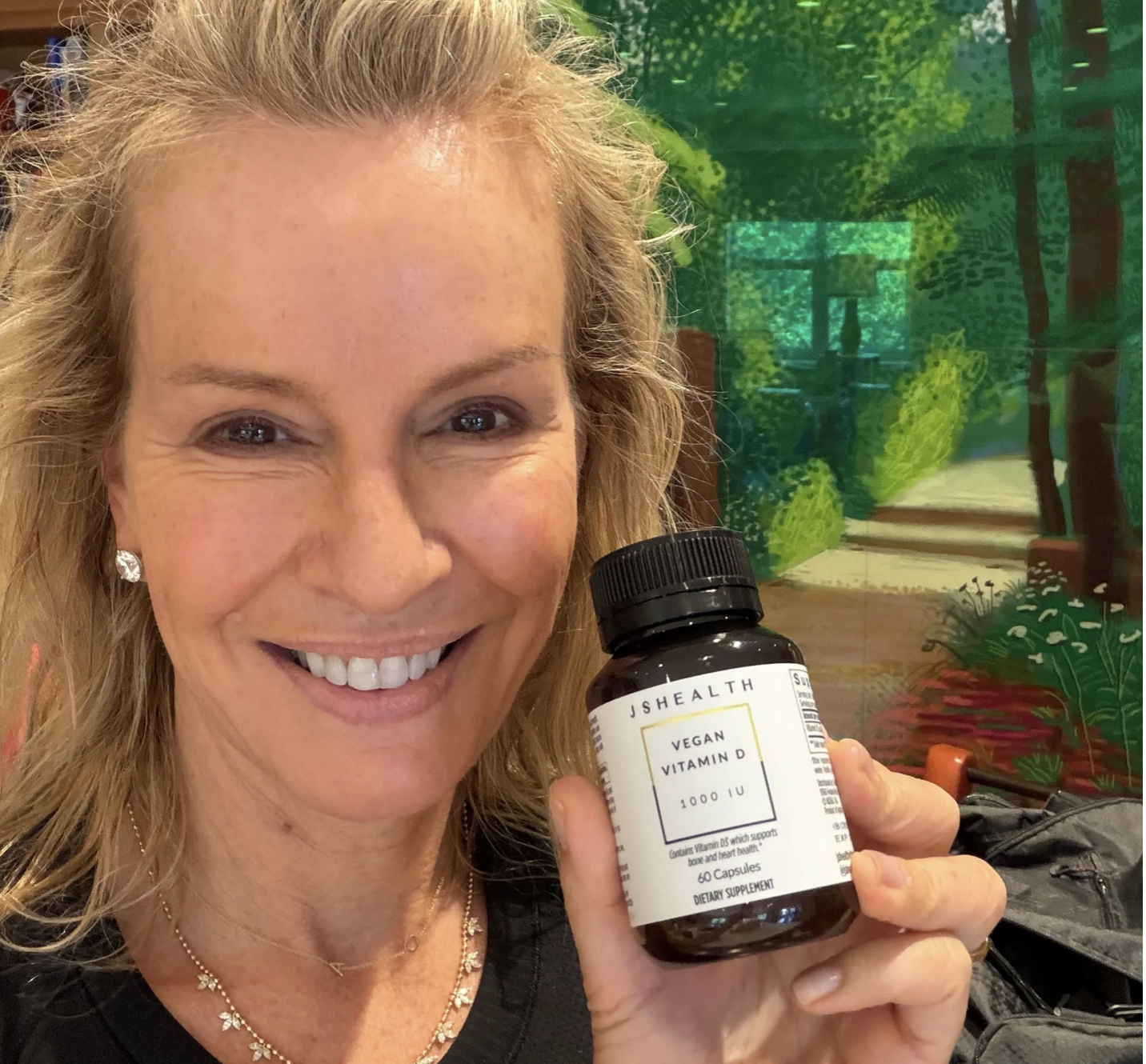
If your labs show you're low, a well-formulated D3 supplement, like JSHealth Vitamins' Vitamin D3, is a reasonable, evidence-supported choice for the metabolic benefit specifically — not just the bone, immune, and cardiovascular story you've heard a hundred times.
Sourcing is worth a mention here too, since not all D3 is created the same way. Most D3 supplements are derived from lanolin, a byproduct of sheep's wool. JSHealth Vitamins’ version is a vegan alternative, cholecalciferol sourced from lichen, a naturally occurring organism found on rocks and trees that produces D3 without any animal input. Each capsule (the recommended daily dose), delivers 25 micrograms, or 1000 IU, which lines up closely with the dose used in several of the studies above showing meaningful metabolic benefit over six to nine months. The guidelines regarding maximum safe daily dose are 4000 IU per day, so more is NOT better! For anyone avoiding animal-derived ingredients for dietary or ethical reasons, that sourcing distinction matters without requiring any tradeoff in the form of vitamin D you're actually getting.
As always, get tested, know your number, and talk to your doctor before starting any new supplement, especially if you're managing blood sugar, take other medications, or have a history of kidney or calcium-related conditions.

Receive Up to 20% Off JSHealth Vitamins