Healthy Living
Why Being Underweight Is Just as Unhealthy As Being Overweight
While we obsess over weight gain, the health risks of being underweight are often ignored.
Every December, you’ll see a predictable wave of headlines: “8 Tips to Keep Holiday Weight Off Your Hips.” “Bouncing Back After Thanksgiving.” “How to Not Let Hanukkah Ruin Your Diet.”
What you see far less of? Headlines about the risks of being underweight.
That’s a problem. Being underweight can be a significant medical risk factor for all-cause mortality, and as much of a threat to your health, independence, and longevity as being overweight. But this topic is routinely buried by the focus on holiday indulgence.
So today, let’s talk about the other side of the scale.
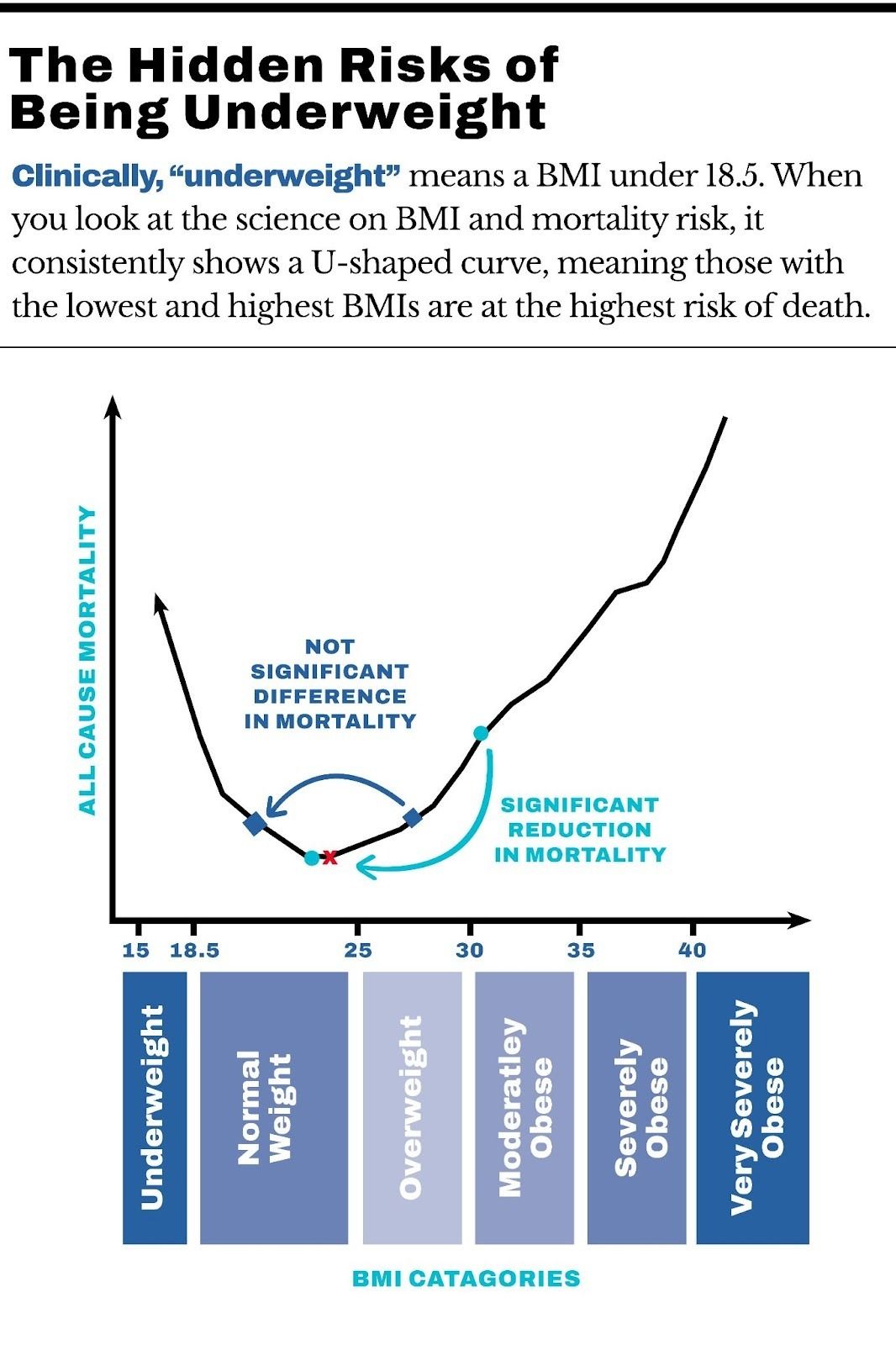
Source: Frontiers in Endocrinology
This is especially relevant in older adults. An Australian study followed 11,000 women aged 70-75 for 18 years and found that underweight women lived 3+ years less than normal-weight women and faced nearly double the mortality risk when in poor health.
Here’s why being underweight is dangerous as we age: We naturally lose bone density (osteopenia) and muscle mass (sarcopenia) as we get older, especially after menopause, when falling estrogen speeds up both.
If you’re underweight on top of that, you’re starting with even less muscle, bone, and nutritional reserves. This can trigger a cascade of consequences:
- Poor wound healing
- Higher risk of falls and fractures
- Longer recovery after illness or surgery
- Greater vulnerability to illness (especially during flu season)
Being underweight at this stage of life could mean losing the muscle that keeps you steady, the bones that protect you from fractures, the reserves your body needs to bounce back, and your strength to remain independent.
Losing weight is not a cosmetic issue. It’s a health issue.
How to Know If You’re Underweight
Even if your BMI isn’t “underweight,” your body can still be under-fueled. Here are red flags to watch out for:
- Your pants are loose in the thighs and butt. This isn’t just about losing belly fat. It’s muscle loss in your legs and glutes, which affects your balance.
- You’re wiped out from minor activities. If a trip to the grocery store or folding laundry leaves you exhausted, that’s your body telling you it doesn’t have enough fuel.
- Your grip is weaker. Can’t twist open a jar lid? Struggling to carry a gallon of milk? Loss of arm and hand strength is a sign of muscle loss.
- You’re getting sick more often. Frequent colds or cuts that take weeks to heal might point to a weakened immune system.
How to Gain In The Right Way
It’s tempting to assume the best way to “fix” being underweight is to just “eat more.” But the goal is to build lean muscle mass, not just add pounds.
Here are some strategies I use with patients:
1. Prioritize protein (especially at breakfast)
Aim for roughly 1.6 grams of protein per kilogram of body weight per day (more if you’re active or already have low muscle mass), divided over your meals. For example, if you weigh 125 lbs, shoot for 90 grams of protein a day.
- Zoom In: Why breakfast? Research shows that older adults may build muscle more effectively when they front-load protein earlier in the day.
This takes strategy and planning, but it is vitally important. A few of my go-to morning recipes include a matcha yogurt bowl with berries or a spiced berry smoothie.
2. Add resistance training
You cannot build muscle without progressive resistance. That can be:
- Weight machines
- Dumbbells or resistance bands
- Bodyweight moves: squats to a chair, wall push-ups, step-ups
Studies show that even women in their 70s and 80s can build significant strength and muscle with resistance training. It’s never “too late” for your muscles.
Lifting weights for my entire life is the single greatest element responsible for my physique and fitness level now that I am 56. It is a MUST.
3. Eat enough calories (not just protein)
If you’re only focused on protein while restricting everything else, your body will burn that protein for energy rather than use it to build muscle.
Be sure to eat healthy fats and complex carbs:
- Fatty fish (salmon, mackerel, sardines)
- Whole grains: oats, quinoa, farro, brown rice
- Olive oil, avocado, nuts, seeds, and nut butters
4. Screen for medical causes
Unintentional weight loss or inability to gain weight is a medical red flag. Possible causes include thyroid dysfunction, GI disorders, malignancy, depression, medications, and more.
Ask your doctor about:
- Bone density testing
- A referral to a dietitian or nutritionist if needed
- Labs (CBC, thyroid, inflammatory markers, nutrition labs)
The New Goal: Strong, Stable, & Here For a Long Time
If you’ve spent a lifetime being praised for being “tiny,” it can feel deeply uncomfortable to gain weight or add visible muscle. But your 50s, 60s, 70s, and 80s are not about shrinking. They’re about staying strong and independent for as long as possible.
While the world obsesses over holiday weight gain, reframe what “gain” means. Gaining muscle and strength is not something to fear. It’s how you give your future self a body that lets you keep showing up.