Healthy Living
Why “Just Drink More Water” Isn’t The Whole Story
We assume water is safe by default—but outdated infrastructure, emerging contaminants, and packaging raise real questions. Here’s what actually matters when it comes to clean, trustworthy hydration.

We’re taught that water is the one thing we can inherently trust.
It’s what our bodies are made of. It’s what we’re told to drink more of when we’re pregnant, exhausted, sick, or trying to “glow.” But there’s a widening gap between what we expect from our water and what the system actually delivers.
An Old Water Infrastructure System
The backbone of US water safety, the Safe Drinking Water Act, was passed in 1974. While it was a triumph for public health at the time, that infrastructure system was notdesigned to address the contaminants we’re now aware of.
From “forever chemicals” (PFAS) to microplastics, our water is now filled with thousands of contaminants. These contaminants act as endocrine disruptors, interfering with our hormones, even at very low levels.
- Zoom In: There are currently no federal standards that limit PFAs or microplastics in either tap or bottled water.
To be clear, municipal water utilities aren’t the “bad guys.” They do the best they can with the tools they have. But they’re often constrained by aging infrastructure, limited funding, and outdated regulations.
The Bottled Water Paradox
“What if I just stick to bottled water?” While bottled water is regulated differently (and in some cases less stringently than municipal tap water!), brands are not legally required to test for many of these contaminants. As a result, many simply don’t.
If a company wants to use terms like “spring,” “artesian,” or “natural,” they are legally limited in how much they can purify the water. The appeal is in the “naturalness,” but that also means they can’t filter out everything.
And since these sources are subject to changes in rainfall, geology, and surrounding land use, even the best springs can carry naturally occurring trace contaminants from season to season.
On the other hand, if a company does go the purification route, it won’t get credit for its source. This means most purified waters start with municipal tap water, then rely on filtration to improve quality and consistency.
“What about modern filtration?” It helps…but it isn’t magic. Modern membrane systems are effective at reducing many contaminants, yet no single method addresses everything under all conditions. The quality of the starting source still matters.
Bottled Water Container: Glass vs. Plastic
Then there’s the container. Glass used to be the standard for bottled water. The industry moved away from it because glass is heavy, more expensive, and slower to run through a bottling line. Plastic lines run faster. Aluminum cans run even faster.
Today, most bottled water is packaged in some form of plastic, whether that’s PET bottles, plastic-lined aluminum cans, or cartons lined with plastic. Under normal supply chain conditions, including heat, storage time, and transport, those materials can degrade.
None of this means our water is universally unsafe. But it does mean that consumers are often operating with incomplete information about something they consume every single day.
What Changed My Thinking
After months of reading studies and reviewing test results, I came to a conclusion. Truly clean, consistent water depends on both a high-quality source and equally high-quality filtration, mineralization, and bottling practices.
That realization is what led me to invest in Loonen. I met the founder, Clara Sieg, last year, and spent a lot of time speaking with her, hearing the evolution of how Loonenwas developed, and looking into the world of bottled water myself. I was not only impressed with Loonen, but I felt compelled to help them with their mission and their launch, and to help them get their story out about the ways in which they are different.
The Loonen Way:
- Loonen starts with pristine spring water – not municipal water – and then uses a non-chemical, physical membrane filtration process to further purify the water.
- Then they remineralize using the highest-quality, lab-tested minerals (like Celtic sea salt instead of refined table salt) to restore a balanced taste and hydration profile. It’s crisp and refreshing.
- All Loonen water is transported in stainless steel tankers and piping to avoid exposure to plastic along the way. Then, they bottle exclusively in glass with microplastic-free caps/seals.
- Most importantly, Loonen tests every batch for microplastics, forever chemicals, and hundreds of other contaminants. The results are third-party certified, shared publicly, and available via QR code on every single bottle.
It’s slower, harder, and more expensive. But in comparison to the other few brands of “clean” water, Loonen is a fraction of the cost and has already sold out during its debut on Amazon!
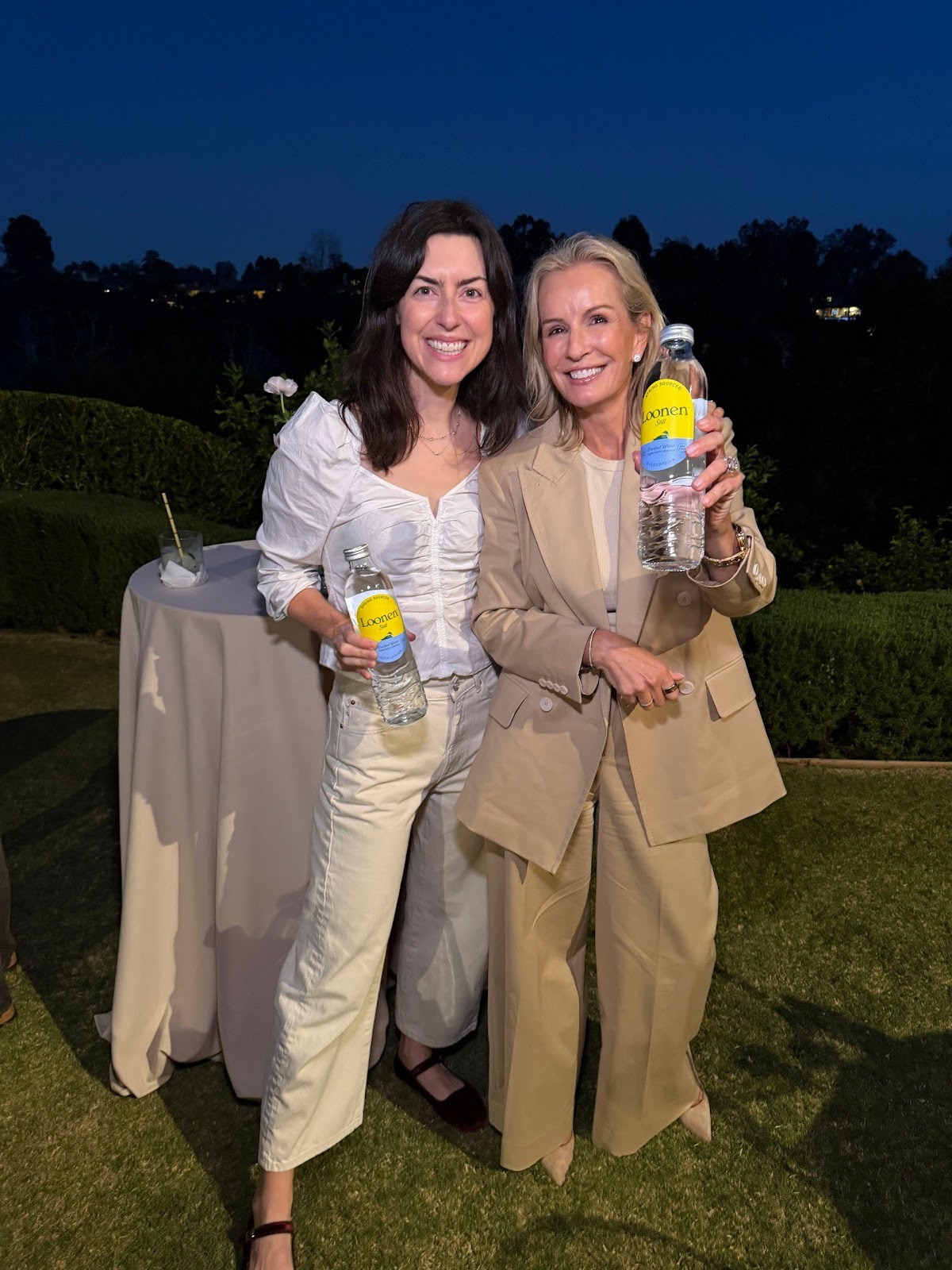
And yes, hydration really does help you glow and is good for your body from your brain to your kidneys. I can confirm this after aggressively testing the theory on myself. And as you probably know about me by now, I don’t recommend anything to my friends, patients, followers, readers, or viewers that I don’t do, wouldn’t do, or haven’t done myself.