Wellness Resources
Can Pasta Water Give You Shinier Hair?
Is pasta water the secret to glossy hair or just another carb-loaded gimmick?
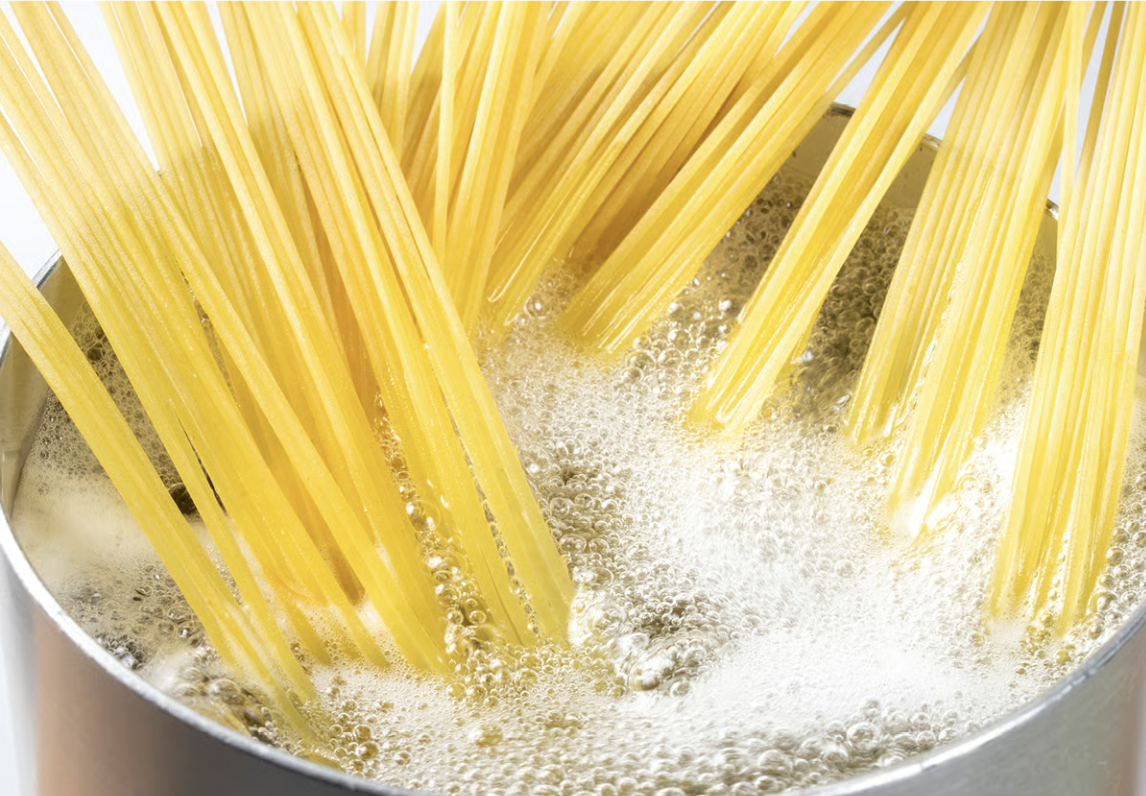
You’ve probably never looked at your pasta and thought, “That could help my hair.” But that’s exactly what the latest trend suggests (and no, we’re not talking about the rigatoni-as-curlers thing on TikTok).
The idea: Rinsing your hair with leftover pasta water boosts softness and shine, courtesy of starches (the carbohydrates released when your penne boils). 🍝
- Zoom In: Starches coat the hair with a film that helps strands slide past each other more easily. It’s the same mechanics many hair conditioners use.
That said, dumping your leftover spaghetti water on your head feels odd. Where’d this even come from?
Well, before pasta water, there was rice water. Japanese court ladies in the Heian Period (794-1185 AD) reportedly used rice rinse water (Yu-Su-Ru) to grow floor-length hair and prevent graying.
- Zoom In: Rice grains are 80-90% starch and loaded with amino acids, vitamins, minerals, and antioxidants.
But there’s not a lot of scientific evidence on rice water. While a 2022 review did find that rice bran products may promote hair growth, it focused on rice bran—not rice water.
At least rice can point to some research. Pasta can’t.
Unfortunately, there isn’t a single scientific study that has tested pasta water as a hair treatment. And pasta water comes with two potential problems that could damage your hair: salt and heat.
- Salt
Most pasta water is salted. Salt pulls moisture from strands and roughens cuticles, especially if your hair is color-treated or fragile.
- Heat
Heat lifts the hair cuticle. Once lifted, the cuticle can’t lock in moisture, and hair becomes rougher, duller, and more prone to tangles.
Can I Still Try This At Home?
Definitely! I’m all for running your own experiment. Lots of people love using pasta water (myself included) for velvety smooth strands. Here’s my “do no harm” protocol:
- Use unsalted water only.
- Strain and cool. Aim for room temperature.
- Dilute. Mix 1:1 with plain water. More starch isn’t always better. Some dermatologists warn that heavy starches may actually damage hair.
- Use as a post-shampoo, pre-conditioner rinse. Massage through lengths for 30–60 seconds, then rinse and follow with your usual conditioner.
- Track your results. Limit use to once weekly and judge by how easily your hair detangles and how much breakage you see in your brush, not just how your hair “feels.”
Pasta water isn’t for everyone. Skip it if you have a history of scalp eczema or folliculitis, very fine hair that gets weighed down easily, fresh color, or sensitivity to food proteins (gluten isn’t absorbed through hair, but residue can irritate).
And if your main concern is thinning? Stick with evidence-based options (e.g., minoxidil and adequate protein/iron).