Nutrition Advice
Do Essential Amino Acids Really Beat Protein After 50?
Essential amino acids are being marketed as the secret to muscle and longevity after 50—but are they truly effective, or just efficient hype? Here’s how EAAs actually compare to whole protein for women in midlife.
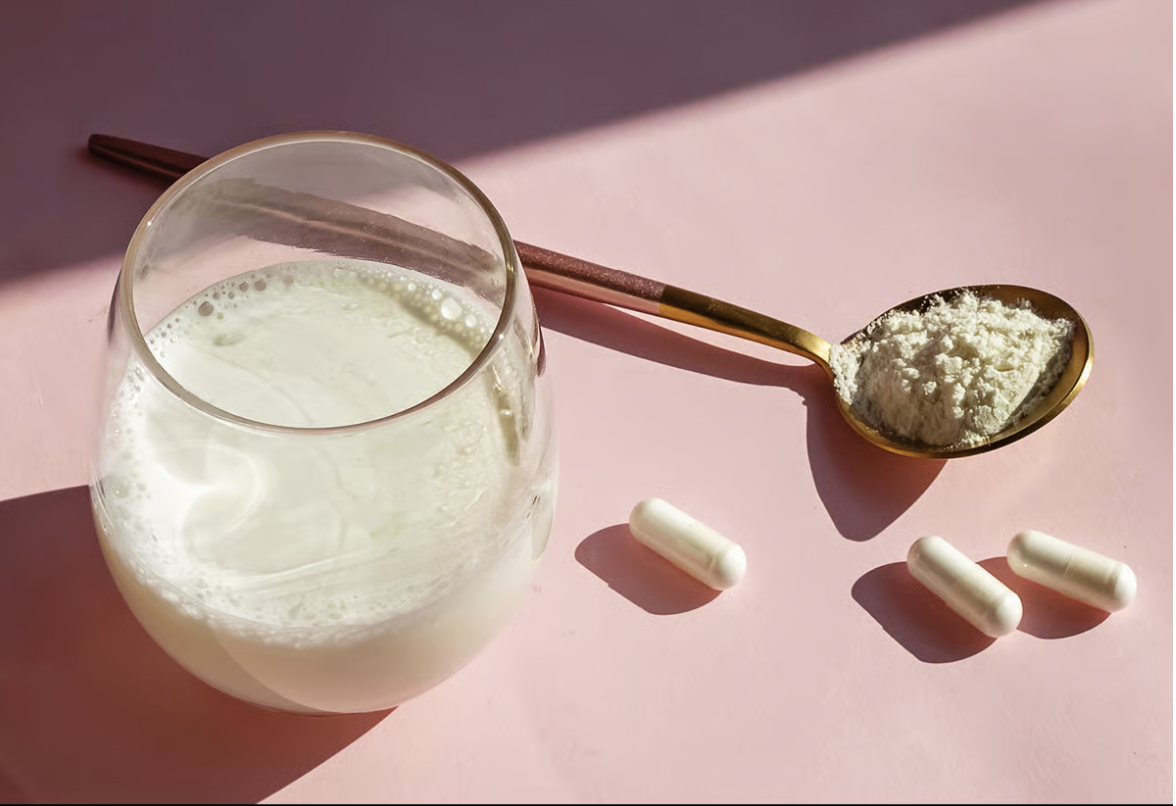
“The ultimate muscle builder.” “Anti-aging superfood.” If you’ve spent five minutes on social media lately, you’ve seen the hype. Essential Amino Acids (EAAs) are being touted as the “missing link” for muscle growth and staying strong as we age.
But are these tubs of powder the real deal…or just clever marketing?
Let’s break down the differences between EAA supplements and protein, specifically for women over 50 who don’t want to waste time on fluff.
EEAs From Food Versus Supplements
Protein is made up of amino acids. Of the 20 amino acids we use, your body can only synthesize 11. The other nine have to come from foods or supplements.
- Zoom In: Essential amino acids are called “essential” not because they’re “more important,” but because you must get them elsewhere.
When you eat whole protein (such as fish, eggs, or chicken), you’re getting all nine essential amino acids packaged inside a “protein matrix” of calories and nutrients.
EAA supplements are different. They deliver those nine amino acids in an isolated, pre-digested form that hits your system instantly.
How This Impacts Women After 50
After midlife, women face “anabolic resistance,” which is when muscles become “stubborn” and less responsive to exercise and protein. To overcome this and prevent muscle loss, women over 50 need more protein (roughly 1.6g per kilogram of body weight) spread throughout the day.
It isn’t just about hitting a total protein number, though. It’s about what’s in that protein and how much of that protein is actually absorbed. Cue: leucine. This essential amino acid is the “Queen” of protein synthesis and turns on the muscle-building process.
How Much Protein is in EAAs?
Side bar: People always ask me how much protein is in a scoop of essential amino acids. Since leucine makes up about 8-10% of high-quality, complete protein (like animal proteins and soy), we can use it as a benchmark.
- By The Numbers: If your EAA scoop has 1.25 grams of leucine, you’re getting roughly 12-16 grams of high-quality protein.
The big difference is efficiency. If you mix it in water, you’re consuming only about 25 calories, compared to at least 64 calories from a whole-food protein source containing 16 grams of protein.
The Pros and Cons of EEA Supplements
The Pros: Efficiency
The main advantage is caloric efficiency.
EEA supplements trigger muscle repair with almost zero caloric “overhead.” This is useful in specific scenarios: short-term appetite suppression, a workout boost when a full meal feels too heavy, and a way to protect muscle during illness when your appetite is gone.
The Cons: Missing The Foundation
The trade-off is that EEAs provide the “spark” but not the “fuel.” They lack the full nutritional package of whole foods, and you miss out on micronutrients like calcium, iron, zinc, and B vitamins.
- Zoom In: Because they are isolated aminos, they also lack the fiber that keeps you satiated.
Plus? There isn’t enough long-term research data in women over 50 that proves these powders perform better than simply eating enough protein.
My Rx For You
For most women over 50, your goal should be getting 30-35 grams of protein per meal, spread across the day, from high-quality sources (dairy, lean meats, fish, and eggs). EAAs can be helpful, but they’re a tool, not a replacement.
I personally add a scoop of EAAs into my water bottle first thing in the morning to check two boxes: 1) to stay hydrated, 2) to hit my protein target with fewer calories.
If nutrition feels overwhelming, simplify. Lift weights. Get 30-35g of protein in your meals. Use supplements selectively, not as a reflex. That approach is the one that actually aligns with the physiology of aging and the evidence we have.