Healthy Living
Has Vitality Become a Full-Time Job?
The wellness industry has never been bigger—or louder. While many health tools can be helpful, the constant pressure to optimize every aspect of life can create more stress than benefit. Sometimes, the most powerful approach to better health is returning to the simple, evidence-based habits that have supported longevity for generations.
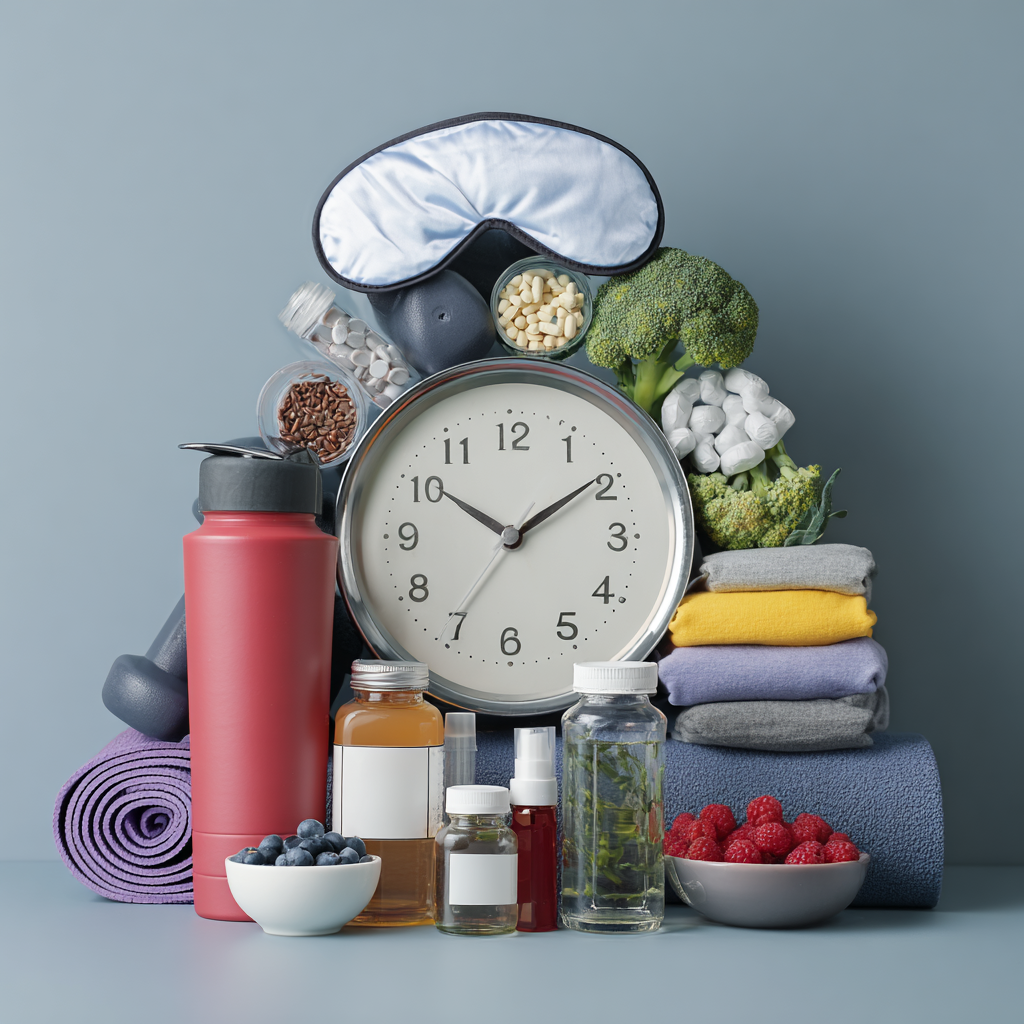
Let me ask you something, and I want you to answer honestly. When was the last time you ate a meal without thinking about its macros, slept without checking a score in the morning, or walked outside without wondering whether the air quality justified an indoor workout instead? If you had to pause to think about it, you are not alone, and I'd argue you're not doing anything wrong. The system around you was built to make that pause necessary.
The global wellness economy is now valued at more than $6 trillion and the biohacking segment alone—the wearables, the supplements, and the continuous glucose monitors worn by people who do not have diabetes—is projected to roughly double by the early 2030s. That is not a grassroots movement. It is an industry, and industries need you to believe the next product is the one that finally fixes you.
Here is my honest, slightly self-deprecating confession: I have fallen for some of this too. I have stood in my kitchen reading the ingredient list on a water filter pitcher as though I were defusing a bomb. I own supplements I never take, and devices that I barely use. I understand the pull, because I feel it.
But somewhere between the red light masks, the cold plunges, the mouth tape, the sleep scores, and the air purifiers in every room, I think we crossed a line from caring for our health into something else. Call it vigilance without end. Call it anxiety wearing the costume of self-care. When wellness requires a dashboard, multiple subscriptions, and a constant low hum of self-monitoring just to feel like you're doing it right, it has stopped being wellness. It has become a second, unpaid job, and the qualifications for that job change every six weeks depending on which influencer just discovered a new villain in your bloodstream. (You can probably tell that I despise fear-mongering!)
I think this hits women over 50 particularly hard, and for a specific reason. This is the decade when your body genuinely is changing, often in ways that feel disorienting, and the wellness industry has learned exactly how to monetize that disorientation. Feeling foggy, tired, or different in your own skin is real. Too often, though, the answer being marketed to you isn’t "this is a normal, well-documented part of a hormonal transition," but rather "buy this $200 device and we'll measure exactly how broken you are." That's not protective. That's exploitative, and you deserve better than being treated as a permanent diagnostic project.
So let me say the unglamorous thing, the thing that doesn't sell a device. Research on the longest living populations have made an observation worth sitting with: those communities have no biohacking at all. Their lifestyle is the intervention. Community, purpose, daily movement, real food, and enough sleep, done consistently, for decades, without a sensor in sight.
That is genuinely the whole protocol, and I say this as someone with three medical degrees. Sleep enough. Eat real food, mostly plants, without needing a scoring app to tell you it was a good meal. Move your body most days, in a way you don't dread. And when you need medication, whether that's a statin, a thyroid prescription, or hormone therapy, take it, because medicine when it's appropriate is not a failure of wellness. It is wellness.
You do not need to detoxify your water, your skin, and your air on the same Tuesday to be a person who takes her health seriously. You need the basics, done consistently, and the confidence to ignore whoever is selling the next miracle. That confidence, not another gadget, is the actual upgrade.