Wellness Tips
The 3 Cooking Oils I'd Recommend For Skin Moisturizer
You don’t need an expensive lotion to hydrate aging skin. These are the three cooking oils I recommend using as body moisturizers—and why they work.
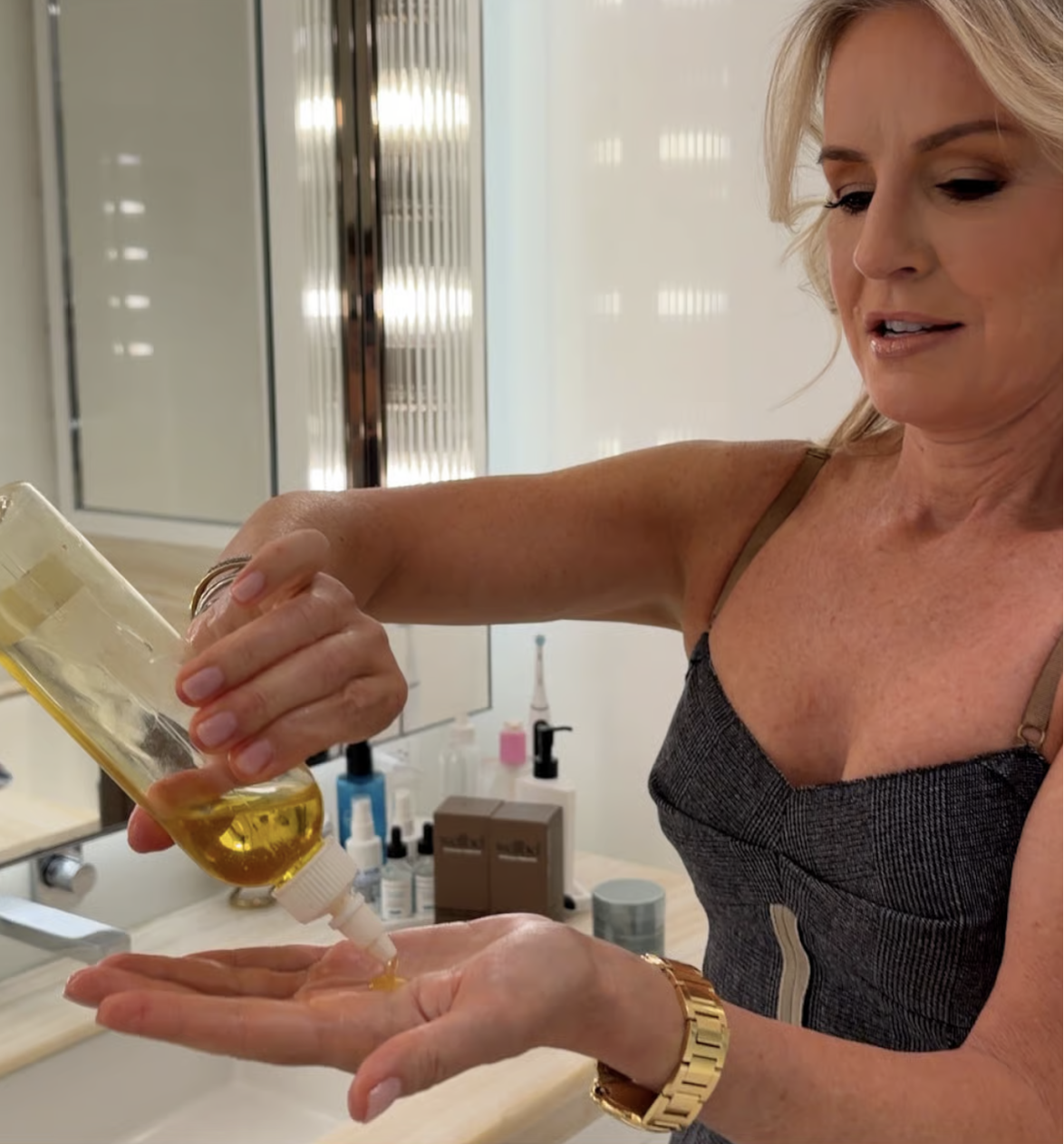
Last week, I shared on Instagram that olive oil is my go-to body moisturizer of choice, and received hundreds of questions! It seems we’re all looking for ways to navigate skincare as we age without needing a chemistry degree or second mortgage.
This is one of those things that requires a mix of science, skincare, shopping savvy, and common sense to decide if or how to incorporate it into your daily routine. But to start, here’s a miniature guide to using cooking oils on your skin.
How Skin Changes After 50
After 50, our skin becomes thinner, drier, and far less forgiving. This is why I’ve spent the last 20 years recommending three simple, budget-friendly staples: olive oil, coconut oil, and good old baby oil.
While they’re all straightforward, they actually behave quite differently on the skin.
My journey with this started in 2004, when I read a book written by a wonderful Ayurvedic physician. One of the basic principles of Ayurvedic health is: “don’t use anything on your skin that is not pure enough to eat.”
While it’s a sweeping generalization, the point is a valid one. As our body’s largest organ, our skin absorbs what we give it into our bloodstream, so choose wisely. This saying is one I’ve never forgotten.
Olive Oil: The Kitchen Staple That Behaves Like Skincare
Olive oil is rich in monounsaturated fats and antioxidants like vitamin E and polyphenols. These act as a natural emollient to soften and smooth the skin by filling in microscopic gaps between skin cells. It’s a wonderful, minimally processed option that’s free from the fragrance and preservatives found in most lotions.
Cons
- Heavy or greasy if overapplied
- Not ideal for acne-prone areas like the chest or back
- Some studies suggest it may disrupt the skin barrier in people with eczema or very sensitive skin if used excessively
- It definitely has a “salad” smell initially, but I find it rapidly dissipates within minutes.
Best use: damp skin after a shower, a small amount warmed in your hands and pressed in, not rubbed aggressively. I use it on my hair (ends only) too.
Coconut Oil: The Tropical Favorite With Mixed Reviews
Coconut oil is a rich emollient with a unique fatty acid profile. Unlike olive oil, it contains lauric acid, which has antimicrobial properties. It forms a thicker, more occlusive layer on the skin, which is great for trapping moisture in stubborn areas like shins, elbows, and feet.
But it’s also more comedogenic, meaning it can clog pores for some people. Many dermatologists caution against using coconut oil on the face or upper chest for this reason.
Coconut oil can also be used as a vaginal lubricant (internally and externally), as can olive oil, but coconut oil tends to be slightly more optimal because of the lack of smell.
Cons
- Can clog pores and trigger breakouts
- Feels heavy in warm weather
- Can stain clothing or sheets if overused
Best use: targeted application to dry areas, especially in winter.
Baby Oil: The Misunderstood Classic
Baby oil is typically mineral oil with fragrance. Mineral oil is an occlusive, meaning it forms a barrier on the skin that prevents water loss. Unlike olive or coconut oil, it doesn’t nourish the skin with fats or antioxidants. Mineral oil is also non-comedogenic and very stable, which is why it’s long been used in dermatology.
Cons
- Contains fragrance unless you buy fragrance-free
- Does not provide nutrients to the skin
- Feels slippery and can transfer to fabrics
Best use: immediately after showering, on damp skin, in small amounts.
Bottom Line: Which Oil Is Right For You?
Dry skin at this stage of life is often more about a weakened barrier from low estrogen, not lack of moisture. Emollients (olive and coconut oil) add softness. Occlusives (baby oil) seal water. But honestly, the “best” oil matters less than how you use it.
The secret is just a small amount, applied to damp skin consistently. This beats a large amount applied sporadically every time.
None are glamorous, but they all work. And they’re MUCH less expensive than a typical body lotion and more pure, due to the lack of other chemical ingredients.