Nutrition Advice
The Missing Link in Your Protein Routine
Protein advice is everywhere, but most of it misses the mark. It’s not just about eating more—it’s about how much you actually need and how your body uses it.

Everyone on your feed is telling you to eat more protein. And honestly? They're not wrong, but how much more do you really need? This is where the advice is often either vague, overwhelming, or (and I saw this recently on a Forbes Instagram post that made me cringe) just flat-out incorrect.
There are two big issues with protein: You probably aren’t eating enough, AND even if you are, you aren’t absorbing it all.
The science-backed formula I use to calculate daily grams of protein is this:
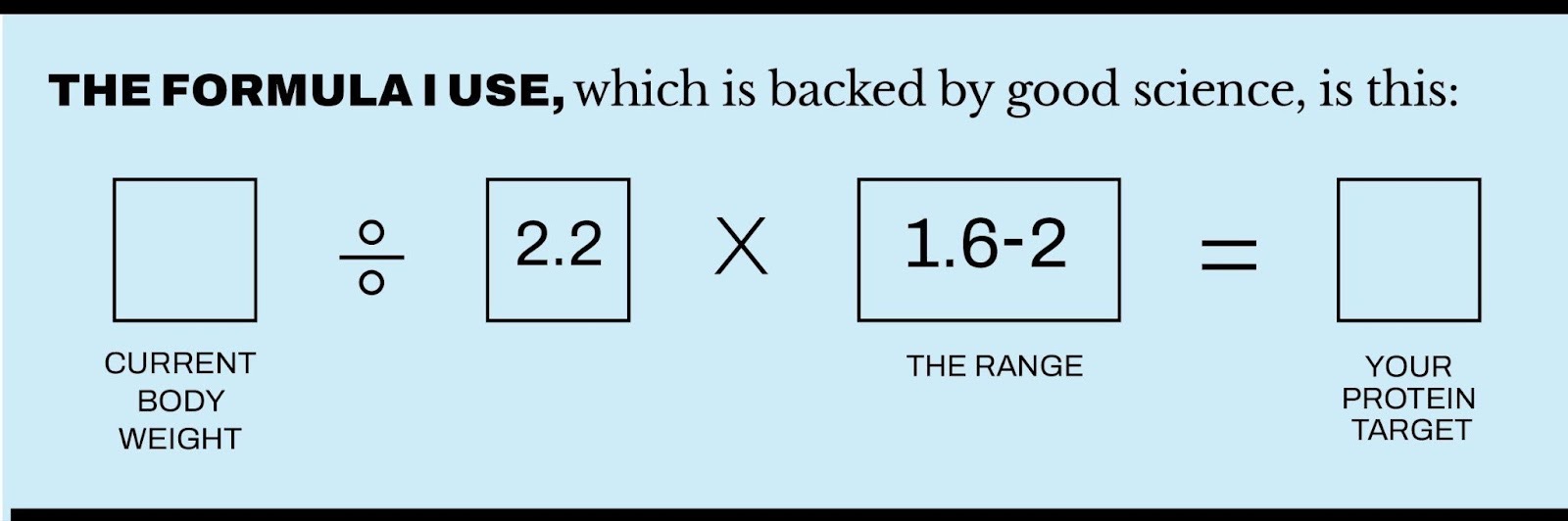
That's it. Run the numbers for a 150-pound woman, and you land around 109 grams, not 200. Not "as much as possible." A real, achievable number rooted in evidence.
Now here's the part most influencers skip entirely: consuming protein and absorbing protein are not the same thing.
You can eat 130 grams in a day, but you generally absorb only 10-30 percent of what you consume. So your body may only use a fraction of it, which can be a huge issue for women already struggling to hit protein targets each day.
This is why intentional pacing matters more than the total. And this is also where I hear the same thing from women constantly: "I just can't eat that much. It feels like so much food. Should I really be eating when I'm not even hungry?"
I get it. I've said versions of this myself. But here's the reframe: protein-forward eating isn't about volume, it's about density and distribution. Greek yogurt, eggs, cottage cheese, a palm-sized piece of fish — these aren't massive meals, they're strategic ones. You're not eating more food. You're eating smarter food.
Spread your intake across three to four meals, aiming for roughly 25-35 grams per meal. Think of it less like hitting a daily quota and more like making consistent deposits into an account that only accepts so much at once.
As for eating when you're not hungry: yes, sometimes you should. Especially at breakfast, when appetite is lower, but the window for muscle protein synthesis is wide open. Your hunger cues and your biological needs don't always align. That's not a flaw. That's just physiology.
One more thing worth knowing: protein needs don't decrease as we age — they increase. Muscle synthesis becomes less efficient after 50, meaning your margin for error shrinks. Getting this right isn't vanity, it's vitality. One scientific discovery I am VERY excited about is an enzyme that can be activated by stomach acid and effectively doubles the absorption of the protein we consume. This enzyme, discovered at the University of California, Davis, builds on Nobel Prize-winning research and has the potential to change metabolic endpoints, such as blood glucose, and overall physical metrics, such as body composition. I will have more on this supplement in future issues! Stay tuned!
So yes, eat more protein, but spread it out, choose dense sources, and please — check the math before you trust the post.
Get clear, science-backed answers on menopause, weight loss, and women’s health—delivered to your inbox every Wednesday, always free. Subscribe here.