Wellness Resources
The Potentially Missing Piece in Your Menopause Care
Menopause isn’t “one-size-fits-all” medicine — and your care shouldn’t be either.

A woman walks into a gynecologist's office. She’s there because her previous doctor–the one who prescribed her hormone replacement therapy (HRT)–moved, and she needs her prescriptions refilled.
The appointment derails within minutes.
When Your Gyn’s Training Stops at Menopause
As the patient explains how HRT eased her perimenopause symptoms–the night sweats, vaginal dryness, and insomnia–the gynecologist asks her why she’s on HRT if she still has her period.
Floored, the patient adds how HRT helped her anxiety and depression.
In a confusing and ‘suboptimal’ encounter, the doctor tells her to: 1) switch to birth control, 2) avoid HRT due to “cancer risk,” and 3) consult a psychiatrist.
When I saw this story online, I felt frustrated but not surprised. This scenario isn’t uncommon in a world where gynecologists typically don’t get specialized training in perimenopause and menopause care.
And it’s not because they don’t care. It’s because the healthcare system is not set up to support them in doing so.
This is why I believe in having a clinician with expertise in menopause on your team. Ideally, they can also manage your broader health needs as you get older.
The good news is that there are primary care practices, such as Amazon One Medical,* for example, that offer menopause specialists nationwide. The difference this makes for women in their 30s-40s and beyond is enormous.
Here’s why:
The Difference Between a Gyn and a Menopause Specialist:
A gynecologist handles reproductive health (Pap smears, breast and ovarian cancer screenings, birth control), and treats the whole woman by screening for heart disease, depression/anxiety, and weight issues. We gynecologists are surgeons, and perform surgery on ovaries, the uterus, cervix and vagina/vulva. Gynecologists are essential to your healthcare.
A menopause specialist handles everything your gynecologist does, plus the nuances of perimenopause and menopause. Because today, we know more about this stage than ever.
We understand the neurobiology of hot flashes (that it’s not only about estrogen, but also about a brain chemical called Neurokinin B), the central role of estrogen in metabolic health, bone density, cardiovascular risk, and cognition. We have evidence-based guidelines for hormone therapy, FDA-approved non-hormonal options, lifestyle strategies, and long-term preventive care.
A menopause specialist helps you navigate all of it:
- Midlife metabolic change (weight gain, insulin resistance, blood sugar changes)
- Non-hormonal treatments (for hot flashes or vasomotor symptoms of menopause, mood, sleep disturbance, and sexual health)
- Hormone therapy (Oral estrogen? Vaginal? Transdermal?)
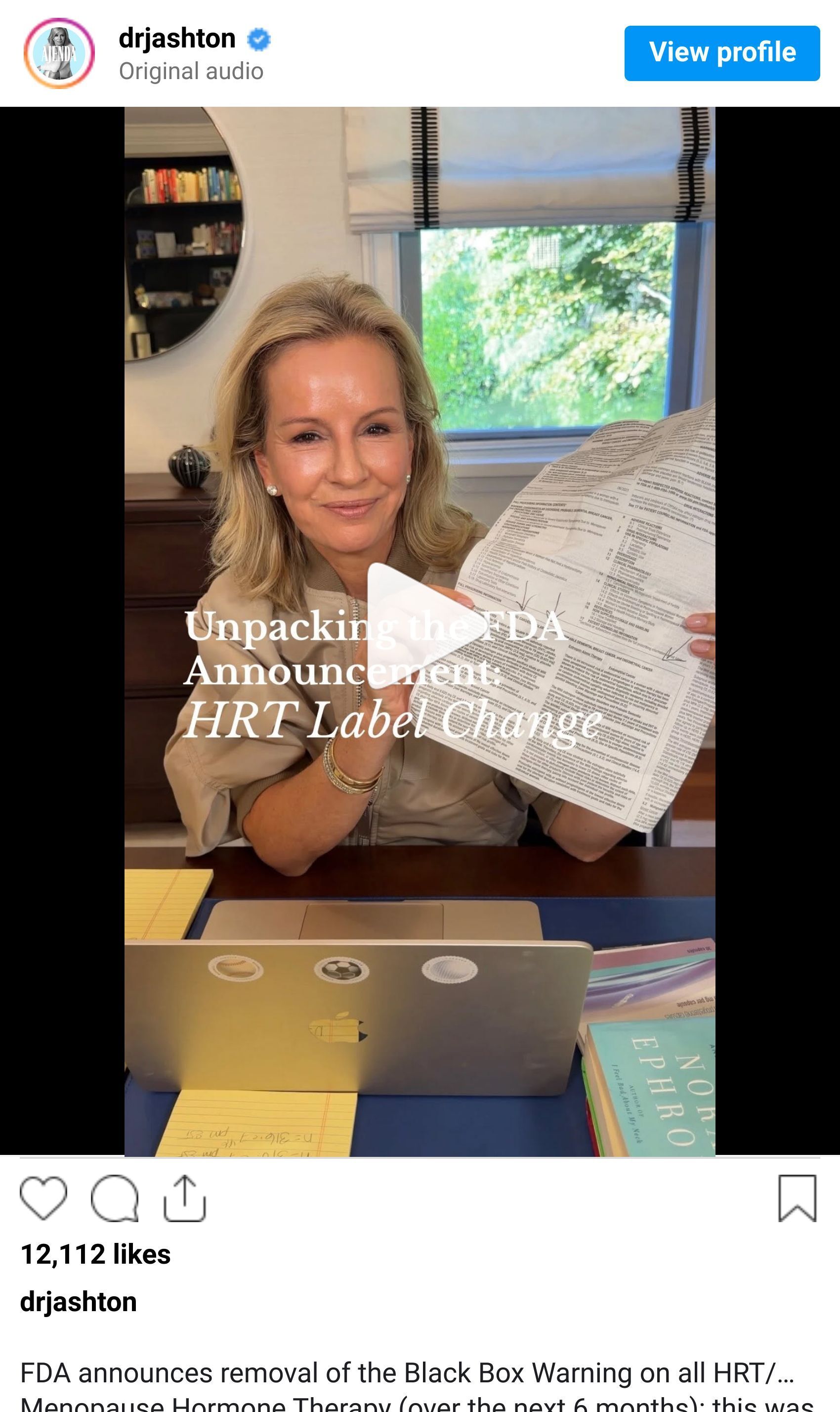
They also stay up to date on the latest research on menopause. Just last month, the FDA removed the Black Box Warning on all HRT after re-evaluating decades of data. This is the kind of update a menopause specialist knows about immediately.
Menopause care is not cookbook medicine. It’s individualized, nuanced care that requires a health care provider who is up to speed with the latest advances and guidelines in menopause medicine.
Do I Really Need to See a Menopause Specialist?
Maybe you’re thinking: “I’ve been seeing my Gyn for years, and I really like her/him. Do I really need to add another doctor?”
If you were my patient, I’d tell you, yes, you should see someone with menopause training. That could be a menopause-certified primary care provider (so you’re consolidating care, not adding to it), or it could be a standalone menopause specialist.
Either way, you probably need this expertise earlier than you’d think:
During Perimenopause:
Perimenopause starts 8-10 years before your last period. It’s not a slow hormonal fade-out. Your hormones fluctuate, and this volatility can cause symptoms like anxiety, insomnia, brain fog, and more.
But during this stage, many women are told their symptoms are “just stress” or to “power through.” Fortunately, a menopause specialist recognizes this as hormonal and can treat you.
The 5-10 Years After Your Final Period:
Once you reach menopause, bone loss accelerates, cardiovascular risk increases, and insulin sensitivity shifts. This makes it a “window of opportunity” for hormone replacement therapy.
- Science Says: Research shows that starting HRT within 10 years of menopause significantly reduces all-cause mortality and cardiovascular disease.
A menopause specialist helps you optimize this window and make decisions today that protect your health for decades.
Where Women Are Getting This Care
Finding a menopause specialist can feel overwhelming. What do you Google? Do you need a referral? Does insurance cover them? And why does every provider’s bio sound the same?!
Unfortunately, many women give up there. But it doesn’t have to be so complicated, especially when primary care practices like One Medical exist.
When I learned about their platform in menopause care, I knew it was something I should talk about, in the hopes of increasing awareness. (They even have an app that can help you find a menopause-trained clinician in minutes!)
One Medical’s menopause-trained providers can:
- Pinpoint whether your symptoms are hormonal, lifestyle-related, or something else.
- Help decide whether HRT or another treatment is right for you (and which dose is safest!). And if you can’t take hormones or don’t want to take hormones, provide information about FDA-approved non-hormonal options for hot flashes and night sweats due to menopause.
- Build a holistic plan of non-hormonal medications, supplements, and lifestyle changes to help restore your sleep, weight, and sexual health.
And One Medical’s care isn’t just a one-time thing. After a structured initial assessment, you’ll have regular follow-up visits to evaluate treatment and ongoing maintenance every 6-12 months to assess symptoms and side effects.
My Final Advice As Your Doctor (And Friend)
Keep your OB/GYN, but consider having a menopause expert on your team, whether that’s a dedicated specialist or primary care provider with menopause training. You deserve clinicians trained in the health issues relevant to all stages of your life, not just your 20s and 30s.
While that woman who walked into her gynecologist’s office deserved better, it’s reassuring to know that primary care providers like One Medical are making it easier for women like her to get comprehensive care that doesn’t treat menopause like an afterthought, but as a core part of women’s health.