Wellness Resources
When Thin Became the Story Again
The return of ultra-thin beauty standards isn’t just a fashion moment—it reflects a deeper cultural shift that raises important questions about health, aging, and the use of powerful medications like GLP-1s.

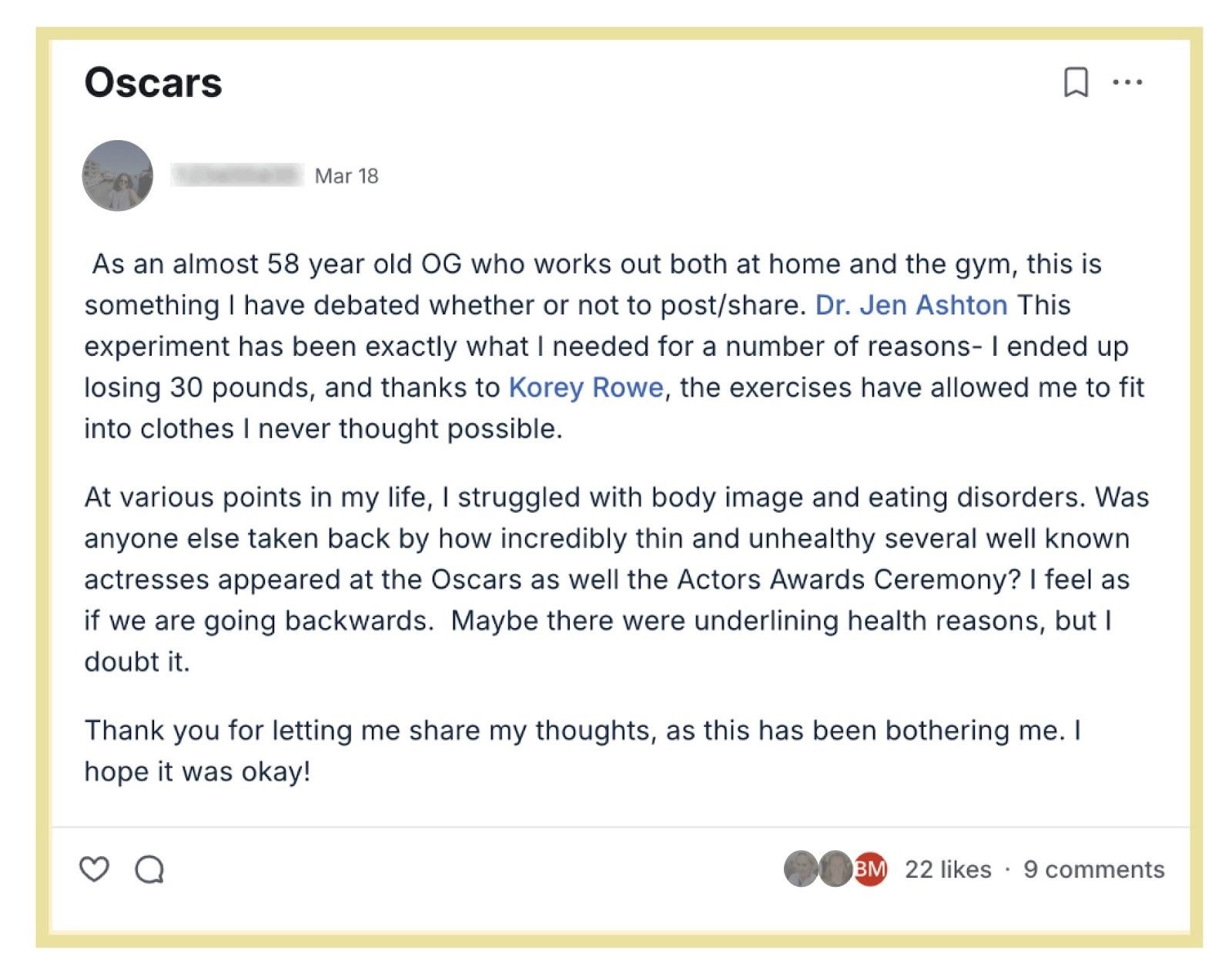
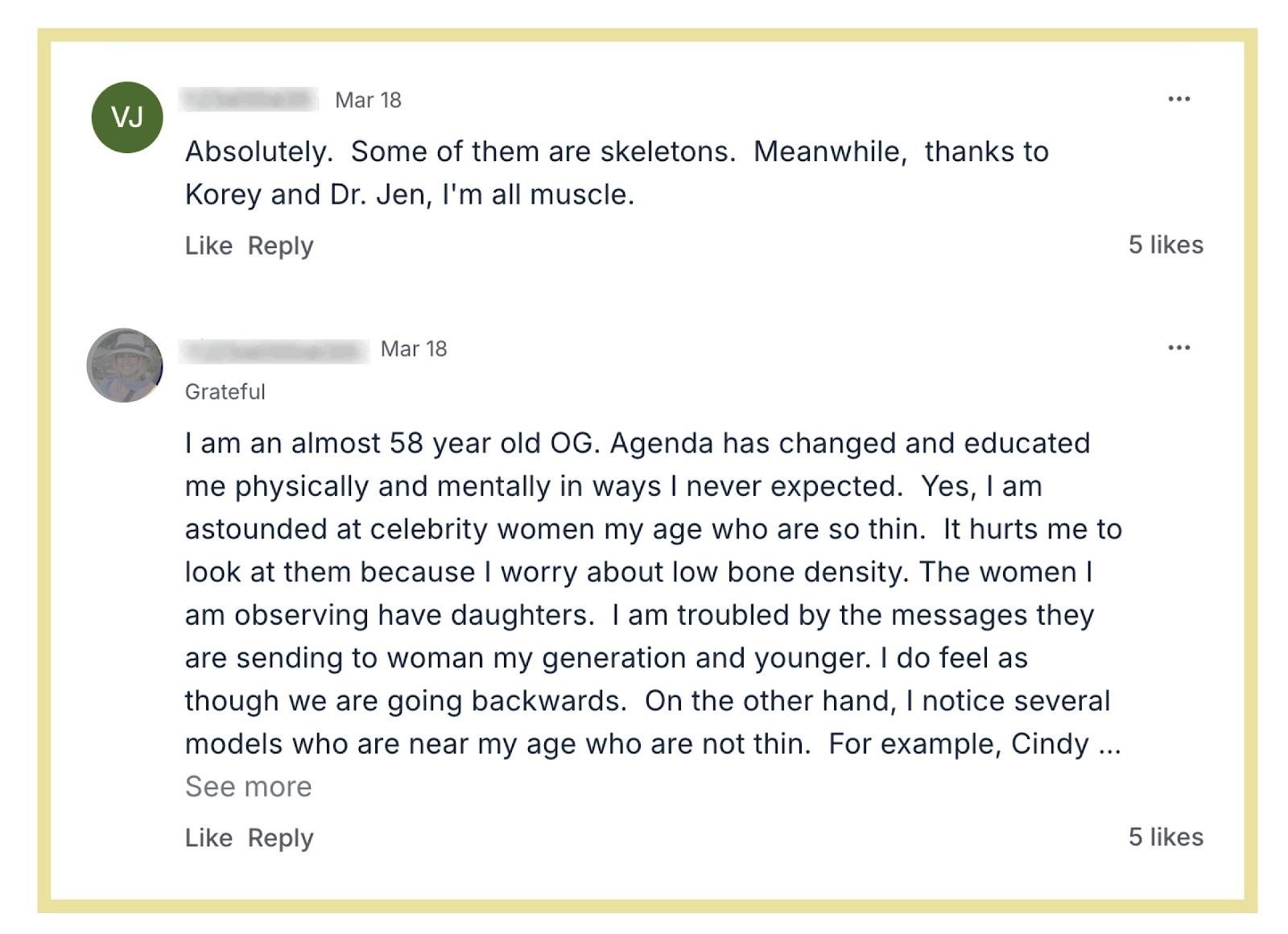
I watched the Oscars this year the way I imagine a lot of you did: appreciating the fashion, admiring the talent, and then finding myself stopped cold by something harder to name. It wasn't envy. It wasn't admiration; it was concern.
The ultra-thin silhouette was back on that red carpet in a way we haven't seen since the early 2000s. And this time, we know what's likely behind it.
I want to be careful here, because this topic deserves it. I am not commenting on any individual's body, their personal choices, or their medical history. I don't know what any specific person is taking, struggling with, or navigating privately. What I am commenting on is the collective image that got beamed into millions of homes that night, and what it communicates to women, particularly women over 50, who are already fighting hard enough against a culture that makes them feel invisible.
GLP-1 medications are genuinely remarkable. I've written about this before, and I'll say it again: for the right person, they are a serious and legitimate medical tool. But a medication designed to treat obesity and metabolic disease (and possibly even provide some healthspan long-term benefits that are independent of weight loss for people without overweight/obesity) is increasingly being used as an aesthetic accelerant by people who were never candidates for it clinically. The result, on a stage as visible as the Oscars, is a beauty standard quietly recalibrated in a way that concerns me deeply as a physician.
Here is the medical reality that often gets lost in the cultural conversation: being significantly underweight carries serious health risks of its own.
- Bone density loss
- Muscle wasting
- Cardiac arrhythmias
- Hormonal disruption
- Immune suppression.
Let me be clear: after 50, when we are already fighting to preserve muscle mass and bone integrity, excessive thinness isn't a health achievement; it's a liability. It actually INCREASES the risk of all-cause mortality, death from everything and anything.
The research is consistent on this. Mortality risk follows a U-shaped curve: it rises at both extremes. We talk constantly about the dangers of obesity, as we should. We almost never talk about the other end of that curve with equal seriousness.
Every woman gets to decide what she does with her own body. Full stop. That is not a negotiable principle for me.
But individual choices, when amplified on a platform that size, stop being purely individual. They become a signal. And the signal this sent, intentionally or not, was that smaller is better, that visible is desirable, that a body that takes up less space is a body worth celebrating.
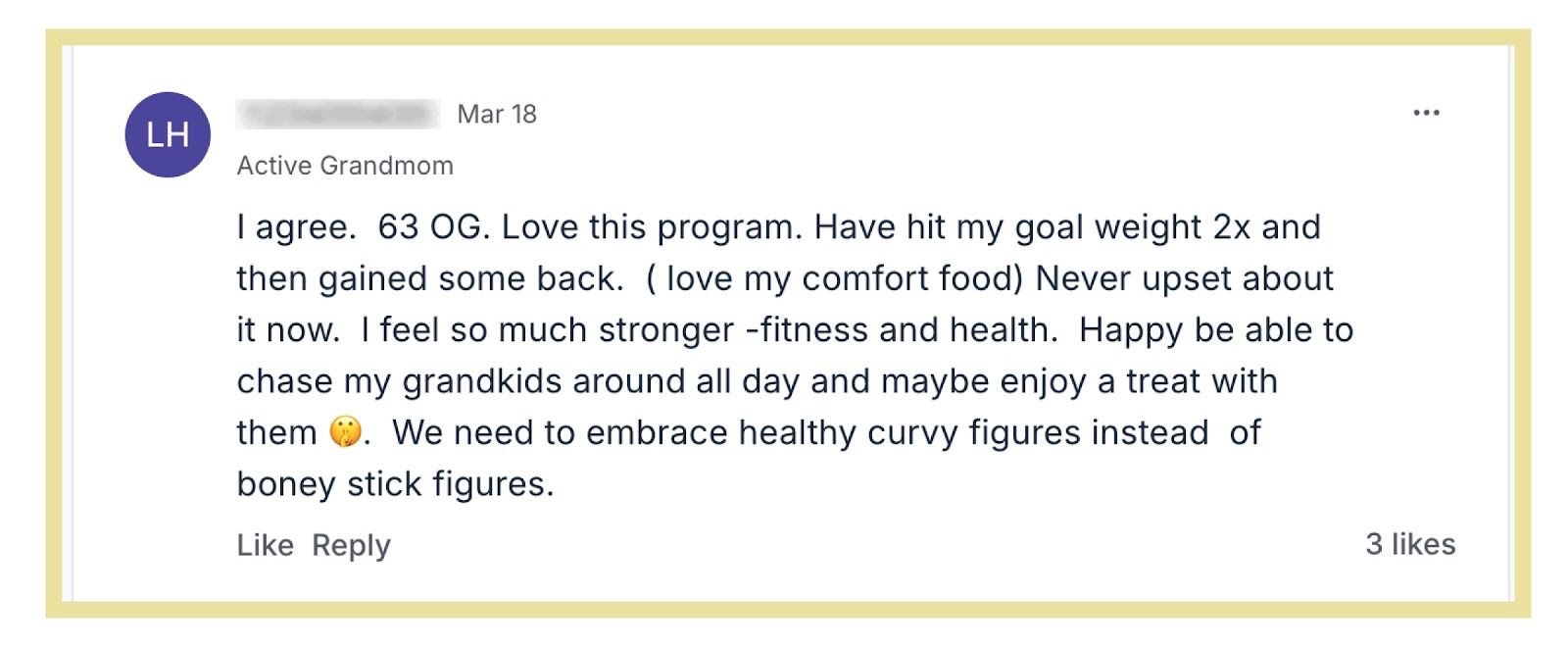
For women over 50 who are already navigating menopause, body composition changes, and a culture that has never been particularly kind to aging female bodies, that signal lands hard. It lands in the way that makes someone skip a meal, reconsider their medication, or look in the mirror with a new and unnecessary hostility.
We can hold two things at once: We can support access to GLP-1 medications for their plethora of benefits and still ask hard questions about what happens when powerful tools migrate from medicine into aesthetics or are overdone/used to an extreme. This is where one of my favorite lines about health and wellness raises its hand: most things in MODERATION.