Wellness Tips
Why I Take Magnesium for Sleep
Daylight saving time can knock fragile sleep off course. Dr. Jen explains why many women over 50 run low on magnesium, what the sleep research does and doesn't show, who should be cautious, and why she takes a three-form magnesium blend at night.
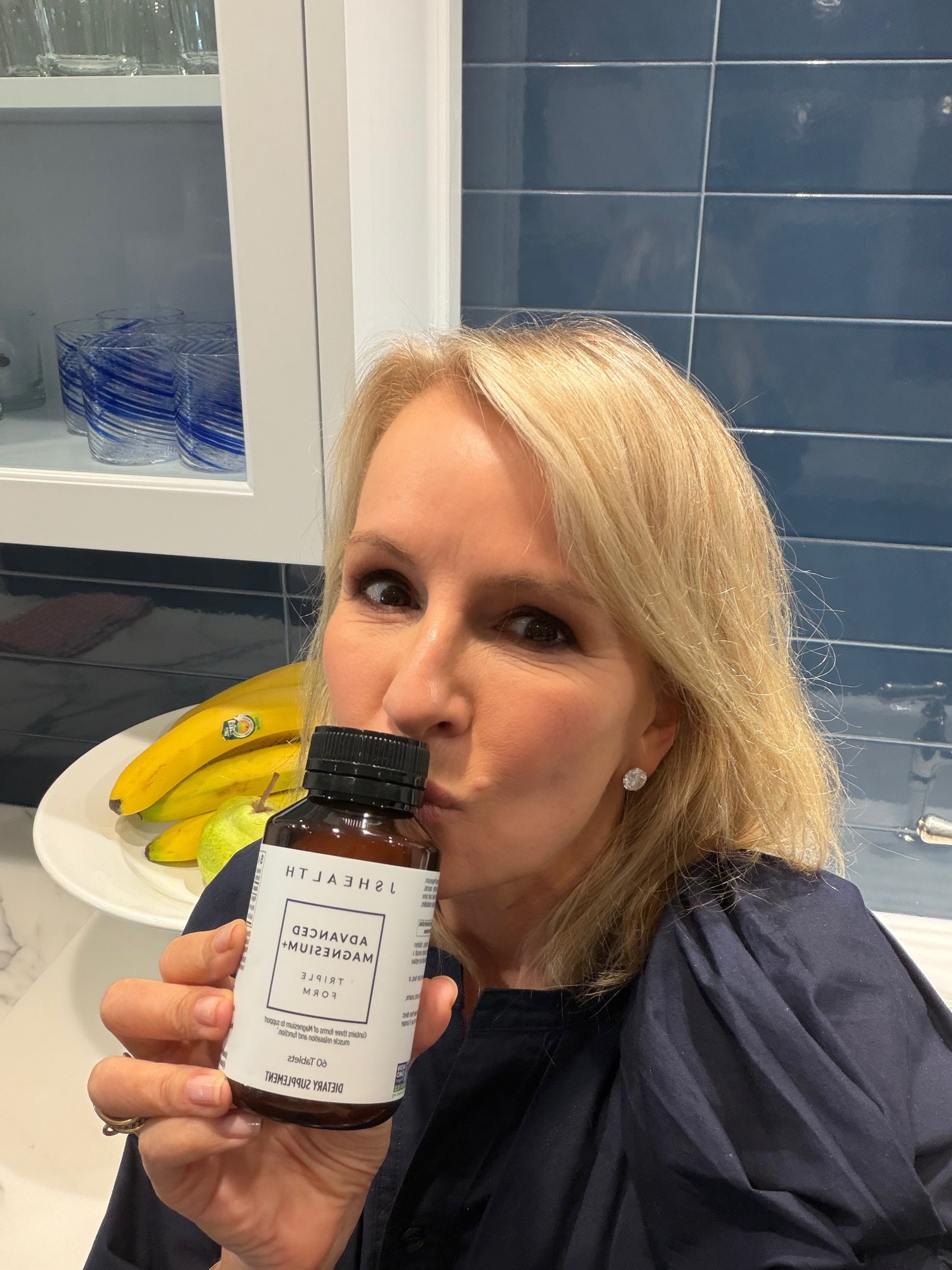
If you’re over 50 and sleep has become something you used to be good at, I see you. Between night sweats, a bladder with its own agenda, and a brain that loves to replay conversations at 2 a.m., a solid night can feel like a luxury. And this week, many of us have one more thing working against us: we just came off daylight saving time. Yes, we “gained” an hour, and I fully support anything that gives me more sleep. But your body runs on an internal clock—your circadian rhythm—and even a one-hour shift can throw it off. Suddenly you’re wide awake at 5 a.m., starving at 4 p.m., and ready for bed before dinner is cleared. For most people, it settles within a few days to a week, but if your sleep was already fragile, this can be the nudge that knocks it off course. So this feels like the right moment to talk about one of the most popular sleep supplements out there: magnesium.
Many of us are running low without knowing it
According to a review in The New England Journal of Medicine, true clinical magnesium deficiency affects about 3% to 10% of the general population, and the rate is higher in people with type 2 diabetes. But the authors point out that this number probably underestimates the real picture. Less than 1% of your body’s magnesium is in your blood, so a “normal” blood test can miss low stores inside your cells.
Diet tells a bigger story. About half of US adults don’t get enough magnesium from food, largely because refined grains have replaced whole grains, nuts, and leafy greens. A 2026 study in The Journal of Nutrition found lower blood levels in women and in adults with diabetes, high blood pressure, or kidney disease. And two of the most common medications in our age group, acid reflux drugs (like omeprazole) and diuretics, can deplete magnesium too.
What the sleep evidence says (and what it doesn’t say)
Magnesium calms the nervous system by dialing down excitatory signals in the brain and supporting the ones that help you wind down. In a small trial in older adults with insomnia, magnesium improved sleep quality and helped people fall asleep faster. A 2021 review in BMC Complementary Medicine and Therapies found that people taking magnesium fell asleep about 17 minutes faster than those on placebo. To be honest, the studies are small and the overall evidence is still limited. The benefit seems largest in people who start out low, which, as we just covered, may be a lot of us.
Is it safe?
For most healthy women, magnesium is low risk. The most common side effect is loose stools, especially at higher doses. However, at doses of 400-500 mg a day or lower, adverse effects are unlikely to occur. A few important exceptions: If you have kidney disease, talk to your doctor first, because your kidneys clear magnesium. And if you take a bisphosphonate for bone health or certain antibiotics, take magnesium a few hours apart, since it can interfere with absorption.
Why I think this one is worth trying
Most magnesium supplements use a single form, often oxide, because it’s cheap and allows a high-looking number on the label. JSHealth’s Advanced Magnesium+ is distinct because it was formulated by an expert nutritionist and uses three types of magnesium, rather than a single form:
- Magnesium glycinate is the foundation, widely regarded as the most absorbable and gentle, particularly for the nervous system and sleep support
- Magnesium citrate is well absorbed (and helps keep things moving, which many of us appreciate)
- Magnesium amino acid chelate offers enhanced absorption, helping your body efficiently absorb and utilize magnesium
From a clinical standpoint, this blend makes sense. Different forms have different absorption pathways and different tissue affinities, so a combination formula is more likely to address varied physiological needs than any single form alone. Plus, this formula deliberately excludes magnesium oxide, meaning fewer GI side effects and better absorption. It’s also vegan, non-GMO, tested for heavy metals, designed in Australia, and manufactured in an NSF GMP-certified facility.
And here’s the part I can’t put in a study: I, personally, notice a difference. As you know, while I always want to know what the data shows, I also ultimately like to do my own experiment and see how I respond, as an “n of one,” as I refer to it. When I take it at night, my sleep feels deeper and heavier, the kind where you wake up and realize you didn’t do your usual 3 a.m. inventory of every unanswered email. True, this is one person’s experience, not a clinical trial, but it’s mine, and I count that as something relevant.
The bottom line
Food comes first: pumpkin seeds, almonds, beans, and leafy greens are all great sources. But if your diet falls short, you take a medication that depletes magnesium, or you simply want to see if it helps your sleep, a quality supplement at the right dose is a reasonable, low-risk thing to try. Your sleep is worth it.
JSHealth's biggest ever Black Friday sale is now LIVE! Shop up to 30% OFF + get luxury gifts worth $90 with your purchase (minimum spend applies).
Related link: SHOP THE SALE


