Wellness Resources
Peptides: Should You Be Taking Them?
Behind the medical questions women ask in midlife is something deeper: the need for clarity, honesty, and reassurance in a system that often falls short.
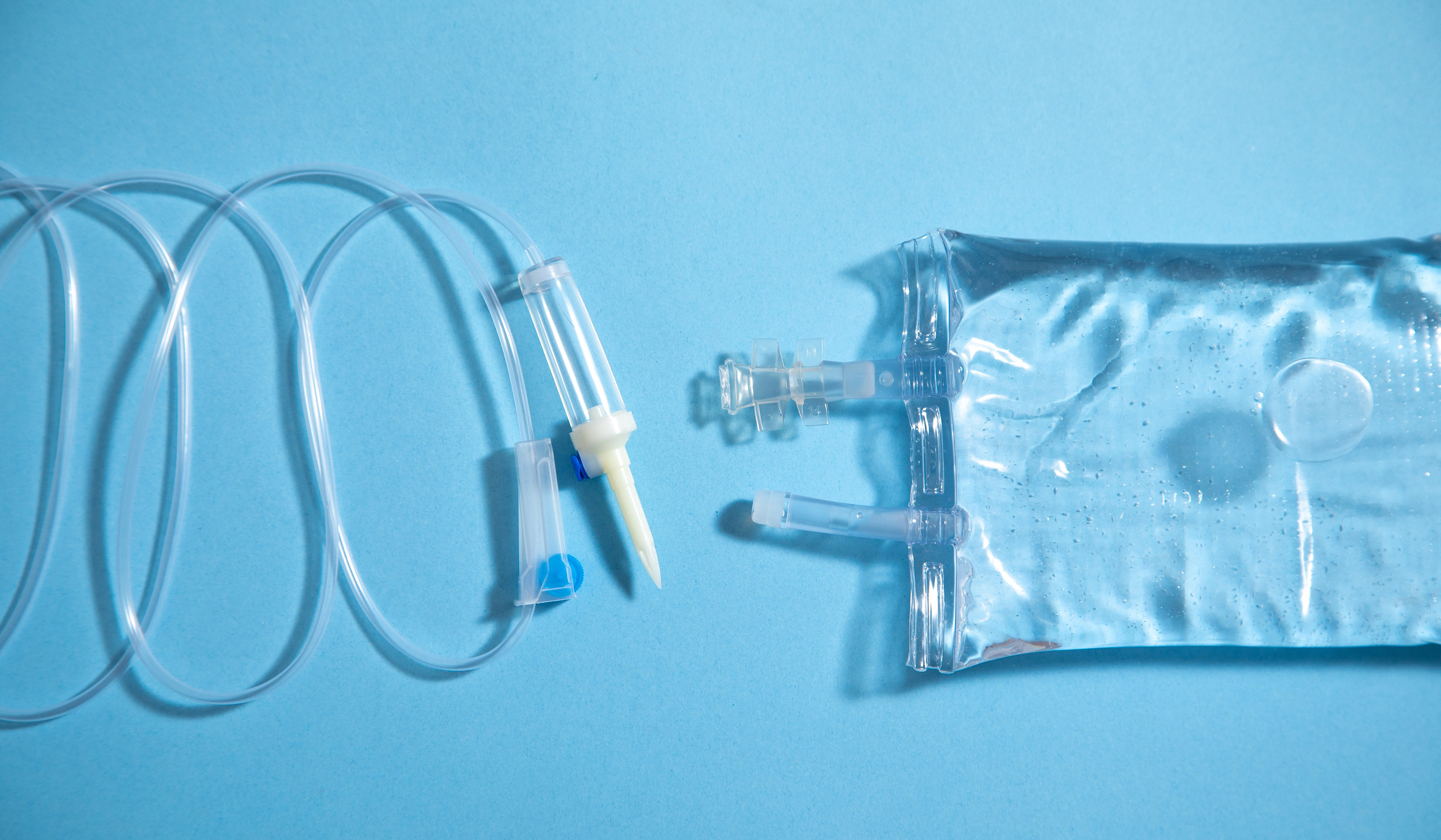
If you spend even five minutes in the wellness corners of the internet right now, you could be forgiven for thinking IV peptides are the next great shortcut to healing, fat loss, muscle gain, recovery, anti-aging, or some glamorous combination of all five. The marketing is slick, and the promises are broad. The science, at least for the peptide cocktails being pushed to healthy people in med spas and online clinics, is not there yet.
To be clear, this is not because peptides are biologically meaningless. Peptides can be extremely powerful. For example, insulin is a peptide, and GLP-1 medications are peptide-based drugs. And precisely because they act on real physiology, they can also cause real side effects, from hypoglycemia with insulin to pancreatitis, gallbladder disease, and serious hypersensitivity reactions with semaglutide. When something is biologically active, it deserves evidence, not enthusiasm. So when I see casual, unsupervised enthusiasm around IV or injectable peptides being sold to otherwise healthy people, my concern is not that they do nothing. My concern is that they actually DO work, and we may not fully understand the downside. This is the nuanced point that is getting completely ignored in this discussion, and it is definitely the most important one.
In medicine, the standard is simple: first, do no harm. Before I recommend that a healthy person put a biologically active compound into their bloodstream, I want evidence from well-designed human trials showing what it does, what it does not do, what the side effects are, how it should be dosed, who should not get it, and what happens over time. The most reputable published peer-reviewed data on peptide use at this time come from the fields of orthopedic surgery and clinical nutrition, and those studies are limited to very specific patient populations and focus on specific peptides.
For many of the peptides now being marketed for recovery, metabolism, inflammation, “cellular repair,” or body composition, that level of evidence in healthy humans is thin to nonexistent. A recent review in the orthopedic literature noted that BPC-157, one of the best-known peptides in this space, has potential based largely on preclinical data, but remains largely unvalidated in human trials. Part of the way in which this peptide works is by stimulating new blood vessels to grow. (One of the unknowns/concerns is whether or not these new blood vessels can help feed or stimulate tumor growth at the same time as stimulating repair.)
This does not mean the future is empty here; it means it’s still being written. Some peptides may eventually prove useful in tightly defined medical settings; that is how medicine works. We identify a target, test it carefully, characterize benefits and risks, and then decide whether it belongs in practice. There are even early signals with certain peptide-related agents in very controlled research settings, which is exactly where they belong for now. But “promising” is not the same as “ready,” and “mechanistically interesting” is definitely not the same as ‘safe to drip into healthy people on a Tuesday afternoon between Pilates and a blowout.’
Then there is the scam factor, and yes, I am using that word deliberately. Many of these products live in the gray zone of compounding, concierge wellness, and direct-to-consumer marketing.
The FDA states plainly that compounded drugs are not FDA-approved, meaning the agency does not verify their safety, effectiveness, or quality before marketing. The FDA has also flagged multiple peptide substances used in compounding (including CJC-1295, ipamorelin, MOTS-c, AOD-9604, and thymosin alpha-1) for concerns such as immunogenicity, peptide-related impurities, limited human safety data, and, in some cases, serious adverse events. Also, let’s remember that many ‘medi-spas’ are administering these peptides in settings that make it impossible for the user/patient to know where the substance is coming from, how it’s been stored, what is actually in it, how it is being injected (often by non-medical personnel), etc., etc., etc.
So where do I land? Curious, but unconvinced. Interested, but not recommending it at this time. This is not a moral objection to peptides. It is a medical one. When evidence in healthy humans is limited, quality control is uncertain, and marketing gets ahead of the data, that is a bad combination. Anecdotes that people “feel amazing” are not enough to outweigh that, especially when we know the placebo effect alone can drive meaningful perceived benefit 30% of the time.
My thumbs-down, for now, is NOT because these compounds cannot work. It is because biologically active things do work, and that is exactly why they require rigor, respect, and restraint. Until that standard is met, IV peptides are not ready for primetime, certainly not in the wellness or spa setting.