Nutrition Advice
The Fiber Facts Women Over 50 Need to Know
Most women know fiber is important for digestion, but its benefits extend far beyond regularity. Emerging research shows that adequate fiber intake may help lower cholesterol, support bone health, reduce breast cancer risk, and even improve longevity. For women over 50, increasing fiber may be one of the simplest and most powerful investments in long-term health.
Most women know fiber is "good for you." Fewer know that it could be one of the most powerful — and most underused — tools for protecting their hearts, bones, and longevity after 50. Here's what the science actually says, including the nuances that rarely make it into headlines.
You're Almost Certainly Not Getting Enough
The recommended fiber intake for women over 50 is about 21 grams per day. The average postmenopausal American woman gets roughly 15 grams, and only about 5 percent of the population meets the target. That gap matters more than most people realize, because the biggest health benefits come from simply moving out of very low intake — not from becoming a fiber overachiever.
A study of nearly 8,000 postmenopausal women found that those with the highest fiber intake had a 15 percent lower risk of dying from any cause and a 31 percent lower risk of dying from heart disease (Guo et al., Maturitas, 2025). The most striking finding? The steepest benefit came from getting above roughly 8 grams per day. Even modest increases — an extra apple and a half-cup of lentils — can move the needle.
The Cholesterol Connection Most Women Underestimate
Heart disease is the leading killer of women over 50, and fiber is one of the most effective (and underused) dietary tools for managing cholesterol. A meta-analysis of 28 clinical trials found that roughly 10 grams per day of psyllium fiber reduced LDL cholesterol by about 13 mg/dL. To put that in perspective: research has shown that adding psyllium to a statin lowers cholesterol as much as doubling the statin dose. For women who experience the common complaint of muscle aches at higher statin doses this is a practical, evidence-based alternative worth discussing with a doctor.
But the benefits go beyond LDL. Psyllium also reduces non-HDL cholesterol and apolipoprotein B, both of which are increasingly recognized as better predictors of cardiovascular risk than LDL alone. The American Heart Association's 2026 dietary guidance statement identifies fiber-rich dietary patterns as consistently associated with lower cardiovascular disease risk.
The Bone Benefit Nobody Talks About
Here's the nuance that surprises even many doctors: certain types of fiber can improve calcium absorption and support bone health — a critical concern for every postmenopausal woman.
When prebiotic fibers reach the colon, gut bacteria ferment them into short-chain fatty acids. These acids lower the pH in the intestine, making calcium more soluble and easier to absorb. A clinical trial in postmenopausal women found that 20 grams per day of soluble corn fiber improved bone calcium retention by 7 percent — the equivalent of absorbing an extra 50 milligrams of calcium daily without taking another supplement. A longitudinal study of 223 early postmenopausal women confirmed that higher fiber intake was positively associated with trabecular bone structure, mediated by specific short-chain fatty acids produced by gut bacteria.
The best food sources of these prebiotic fibers include garlic, onions, leeks, asparagus, bananas, and chicory root. You don't need a supplement. A diet rich in these foods feeds the gut bacteria that help your bones hold onto calcium.
It Lowers Breast Cancer Risk
A meta-analysis of 20 prospective studies found that women with the highest fiber intake had an 8 percent lower risk of breast cancer, with the association holding for both premenopausal and postmenopausal women. The mechanism likely involves fiber's ability to help the body clear excess estrogen more efficiently, reducing the circulating hormone levels that can fuel hormone-driven tumors.
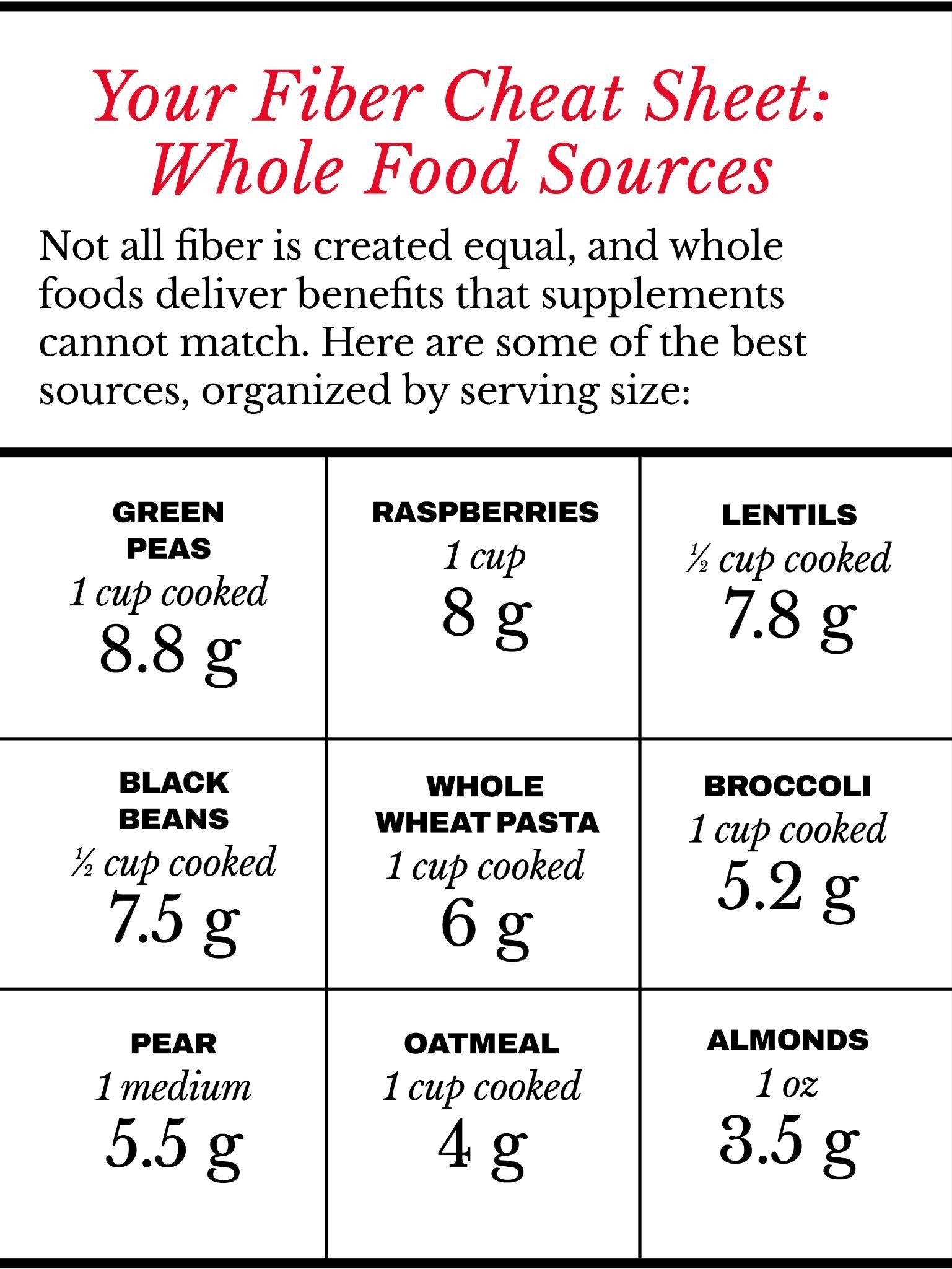
For bone-supporting prebiotic fiber specifically, focus on garlic, onions, leeks, asparagus, bananas, artichokes, and chicory root — these are the foods that feed the gut bacteria responsible for improving calcium absorption.
The Practical Playbook
Start low and go slow. Increasing fiber too quickly causes bloating and gas, which is the number one reason people quit. Add about 3 grams every two weeks. Drink plenty of water with every increase; without adequate fluid, fiber can make constipation worse, not better. And if you take thyroid medication, blood thinners, or other daily prescriptions, take your fiber supplement at least two hours apart to avoid interfering with absorption.
The bottom line: fiber is not glamorous, but for women over 50, it may be one of the simplest, cheapest, and most evidence-backed investments in long-term health. The bar is low, and that's exactly why the payoff is so high.